


In history
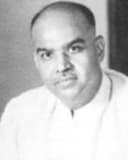
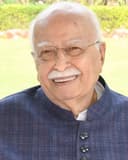
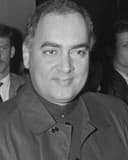
Deendayal Upadhyaya
1916–1968
Jana Sangh's general secretary for fifteen years and the author of Integral Humanism, the four Bombay lectures of April 1965 that the BJP still names as its doctrine. Swadeshi economics and Antyodaya on one side; Bharatiya culture as the nation's soul, an organic reading of varna and an explicitly unitary state on the other.
Furthest from the middle on Recognition, toward Formal equality.
Where they stand
Deendayal Upadhyaya on each of the seven scales, from one pole to the other.
Welfare
−5.0Expansive state provisionMinimal/targeted provisionMarkets
−2.0State-led developmentMarket-led developmentRecognition
−8.0Formal equalityGroup remediesNation
+8.0PluralistMajoritarianAuthority
+1.0Civil libertiesStrong stateCulture
+8.0Personal autonomyTraditional normsFederalism
−7.0CentreStates
The record, axis by axis
Every placement is scored on what was said and done — manifestos, legislation, the governing record — and calibrated against the same trade-offs the quiz asks about.
Placed on writings, not office — he lost the one Lok Sabha seat he contested. Integral Humanism's economic objectives include a guaranteed minimum living standard and work for every citizen; Antyodaya makes the last man the measure — delivered as social duty through decentralised production, not a state apparatus.
'The Two Plans' (1958) attacked the Nehruvian Five-Year Plans as imitative and capital-hungry, but from a swadeshi direction, not a market one: 'centralisation and monopolisation have been the order of the day', rejecting capitalism and socialism together for protected small-scale indigenous industry.
Integral Humanism reads society as a single living organism whose varnas are complementary limbs of the virat purusha, making group remedy unnecessary by construction; the Jana Sangh he ran opposed caste-based reservation for economic criteria, and demanded a uniform civil code over minority personal law.
Chiti — the nation's innate soul — and dharma as its law: 'if dharma is destroyed, the nation perishes'. He replaced 'Hindu' with 'Bharatiya' while keeping the content, and the Jana Sangh under him pressed full Kashmir integration and led the November 1966 cow-slaughter agitation that brought lakhs to Parliament.
Dharma Rajya holds the state to be 'one of several institutions', not supreme — a genuine limiting principle — against RSS organisational discipline as the political ideal, a unitary constitutional design, and no recorded position on preventive detention, police power or press freedom.
Society as an organic whole with dharma its binding law, duties before rights, the joint family and varna order as natural rather than historical, cow protection as a party campaign, and Western individualism and consumerism named the alien thing to resist.
The early Jana Sangh he helped build called for a unitary Indian state and opposed linguistic reorganisation; Integral Humanism reinforces this, treating the nation as one organic whole rather than a federation of parts — decentralisation below the state, not between state and Centre.
And where do you stand?
Answer the same trade-offs yourself and get your seven readings, on the scales you just read.
Free · Anonymous · No account