


In history
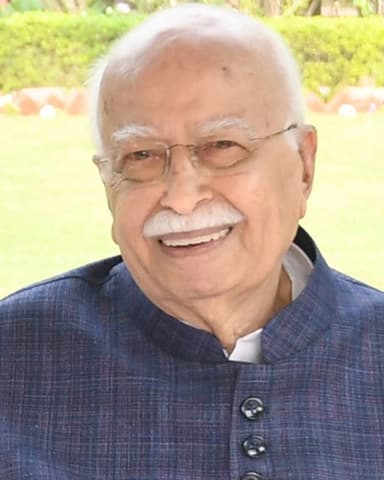
L.K. Advani
Architect of the 1990 Ram Rath Yatra, arrested by Lalu Prasad Yadav en route; Home Minister 1998–2004 who revived preventive detention through POTA. Acquitted in the 2020 Babri Masjid verdict — but in 2005 he called Jinnah 'secular' and lost the BJP presidency over it.
Furthest from the middle on Nation, toward Majoritarian.
Where they stand
L.K. Advani on each of the seven scales, from one pole to the other.
Welfare
0.0Expansive state provisionMinimal/targeted provisionMarkets
+1.0State-led developmentMarket-led developmentRecognition
−5.0Formal equalityGroup remediesNation
+7.5PluralistMajoritarianAuthority
+6.0Civil libertiesStrong stateCulture
+3.0Personal autonomyTraditional normsFederalism
−2.0CentreStates
The record, axis by axis
Every placement is scored on what was said and done — manifestos, legislation, the governing record — and calibrated against the same trade-offs the quiz asks about.
No distinct record of his own; identified overwhelmingly with the nation, culture and authority axes across a career spent mostly in security and party-organisational portfolios
No developed economic position; his Home Ministry and Deputy Prime Ministership were security-focused, not economic
The Rath Yatra was launched in September 1990 within weeks of V.P. Singh's Mandal Commission announcement, widely read as a Hindutva countermobilisation to caste-based OBC politics; BJP under his leadership opposed the Mandal quota expansion at the time, consistent with the party's traditional preference for uniform over caste-specific remedy
The single most consequential majoritarian-mobilisation act on this roster: the Ram Rath Yatra (Somnath to Ayodhya, September–October 1990), for which Lalu Prasad Yadav's Bihar government arrested him at Samastipur in the early hours of 24 October 1990; Home Minister during the Vajpayee government (1998–2004); acquitted with 31 others in the Babri Masjid demolition case by a special CBI court on 30 September 2020, which found no conspiracy and called the demolition 'spontaneous' — but in June 2005, at Jinnah's mausoleum in Pakistan, he called Jinnah's 11 August 1947 constituent-assembly speech 'a classic, forceful espousal of a Secular State' and said he 'personally felt what Jinnah went through', triggering an RSS/VHP backlash that forced his resignation as BJP president days later; the arc — Rath Yatra hardliner and the man who praised Jinnah's secularism — belongs together, and still nets heavily toward the majoritarian pole given the weight of the first against the singular, career-costly deviation of the second
As Home Minister he presided over POTA's 2002 revival of detention without trial, repealed in 2004 after documented misuse (including against Tamil Nadu's Vaiko) — a more directly attributable authority-axis record than most Vajpayee-era ministers, since Home was his own portfolio
The Ayodhya movement is fundamentally a religious-restorationist project, though this overlaps heavily with the nation axis; no distinct personal-autonomy-vs-tradition record (UCC, gender, family law) beyond the general Hindutva programme he helped build
No well-documented personal record distinct from the BJP/Jana Sangh lineage's general historical preference for a unitary national culture over linguistic-provincial federalism
And where do you stand?
Answer the same trade-offs yourself and get your seven readings, on the scales you just read.
Free · Anonymous · No account