



The figures
87 current and historical figures placed on the same seven scales, with the record behind every placement.
In politics today
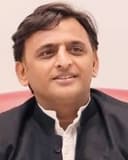 Akhilesh YadavSPSamajwadi Party chief and former UP Chief Minister. The PDA (backward–Dalit–minority) coalition pitch and the caste-census demand, argued from a governing record of expressways, laptops and pensions.
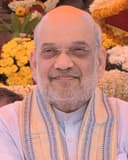 Amit ShahBJPUnion Home Minister since 2019, Minister of Cooperation since 2021, and the BJP's chief organiser before that. Article 370, the CAA and the three criminal codes are his bills — so is a cooperative sector built to compete with private capital, and the Northeast settlements that shrank AFSPA's map.
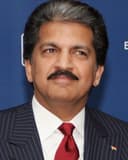 Anand MahindraChairman of the Mahindra Group and one of Indian industry's most-followed voices on social media. Champions manufacturing and an 'India as connector economy' pitch to global capital, funds girl-child education through Nanhi Kali, and stays carefully above day-to-day partisan politics.
- Arnab GoswamiRepublic Media Network's editor-in-chief since 2017, after building Times Now into Indian television's loudest news brand. Studio combat over surgical strikes and 'tukde tukde' framing of dissent for a decade — recently complicated by unusually sharp criticism of his own government over IndiGo and Delhi's air.
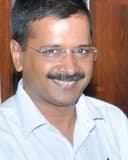 Arvind KejriwalAAPAAP's founder and Delhi's long-serving chief: free electricity, mohalla clinics and government-school spending, sold with deliberate quiet on most identity questions and a centralised grip on his own party.
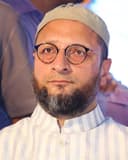 Asaduddin OwaisiAIMIMHyderabad MP and AIMIM chief; Parliament's most persistent constitutionalist voice on Muslim rights — against CAA, UAPA and the Waqf Amendment — joined to old-city welfare politics on the ground.
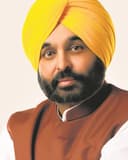 Bhagwant MannAAPPunjab Chief Minister since 2022 and AAP's only government outside Delhi. Free power and neighbourhood clinics with a hard federalist line on Chandigarh and river water — beside a police record that cleared the farm protest sites and a sacrilege law carrying life imprisonment.
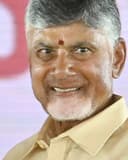 Chandrababu NaiduTDPAndhra Pradesh Chief Minister and TDP chief, the 1990s' original reform-era moderniser — Hyderabad's tech push then, Amaravati and investor-first governance now, with welfare recalibrated rather than expanded.
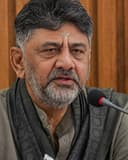 D.K. ShivakumarINCKarnataka's Chief Minister since June 2026, after three years as Deputy CM and Karnataka Congress president since 2020. Co-architect of the state's five welfare 'guarantees' — free electricity, ₹2,000 a month to women — and the first Vokkaliga to lead Karnataka's government since 2004.
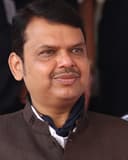 Devendra FadnavisBJPMaharashtra Chief Minister in 2014-19 and again since December 2024, the RSS's most administratively fluent product. Davos-scale investment courtship and a real OBC-quota record beside the 'urban Naxal' security law and an anti-conversion Act.
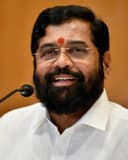 Eknath ShindeSHSThane strongman and Anand Dighe's successor, who split the Shiv Sena in June 2022, ran Maharashtra until December 2024 and is now Deputy Chief Minister. India's largest women's cash transfer on one side, 'Balasaheb's Hindutva' and the NDA on the other.
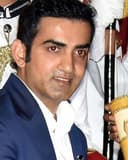 Gautam GambhirBJPTwo World Cup-winning opener for India, then BJP MP for East Delhi from 2019 to 2024 running local sports and coaching programmes for underprivileged youth. Left electoral politics in July 2024 to become India's men's cricket head coach, ending a single, low-profile term in the Lok Sabha.
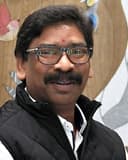 Hemant SorenJMMJharkhand Chief Minister since 2019 — resigned January 2024, returned that July after roughly five months in ED custody — and re-elected with a bigger majority. Tribal land and identity claims — Sarna code, 1932 domicile, 77% reservation — pressed alongside a large central-dues fight with Delhi.
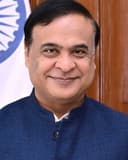 Himanta Biswa SarmaBJPAssam Chief Minister since 2021 and the BJP's sharpest majoritarian voice outside Delhi — a Congress minister until 2015. Mass cash transfers to women alongside a Uniform Civil Code, a public beef ban, bulldozer evictions and open hostility to Bengali-origin Muslims.
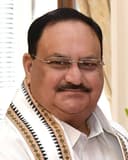 J.P. NaddaBJPBJP national president from 2020 until January 2026, the party's longest tenure since Vajpayee, and Union Health Minister across two terms — 2014-19 and since 2024. Steered Ayushman Bharat's expansion to senior citizens and the party organisation through Article 370, CAA and the Waqf Amendment.
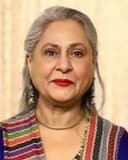 Jaya BachchanSPRajya Sabha MP for the Samajwadi Party across five terms and a National Award-winning actress before politics. Censured in 2024 over a remark against the Chair, then said in 2025 that 'thousands of bodies' were consigned to the river after the Maha Kumbh stampede, a claim the state denied.
- K. AnnamalaiInd.IPS officer turned Tamil Nadu BJP president, 2021–2025: the DMK Files, the 'En Mann En Makkal' padayatra, and a Hindutva pitch translated into Tamil. He lost both seats he contested and quit the BJP on 5 June 2026 to build a movement of his own.
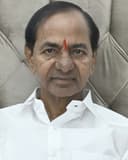 K. Chandrashekar RaoBRSTelangana's founding Chief Minister, 2014–2023, and Leader of the Opposition since. Rythu Bandhu and Dalit Bandhu moved cash at a scale no state had tried, alongside a ₹1 lakh-crore irrigation bet and an anti-Delhi federalism he renamed his party to carry nationally.
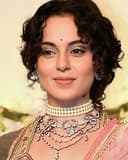 Kangana RanautBJPBollywood star turned BJP MP for Mandi since 2024. 'Emergency', the film she wrote, directed and starred in, indicts Indira Gandhi and Khalistani militancy; a 2024 Gandhi Jayanti post that 'the country doesn't have fathers, only sons' drew 'Godse ideology' accusations and a rare rebuke from her own party.
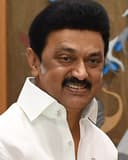 M.K. StalinDMKTamil Nadu Chief Minister since 2021, carrying the Dravidian programme: breakfast schemes and quota defence, social-justice secularism, and the country's loudest state's-rights case — against NEET, Hindi imposition and Governors.
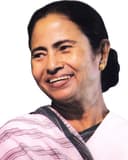 Mamata BanerjeeTMCWest Bengal Chief Minister since 2011. Universal-leaning schemes — Lakshmir Bhandar, Kanyashree — a combative anti-Delhi federalism, and a street-fighter's comfort with concentrated state power.
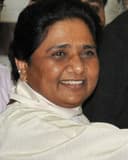 MayawatiBSPFour-time UP Chief Minister and Kanshi Ram's successor at the BSP. Dalit assertion through state power — parks, statues, SC/ST recruitment — with alliances across the spectrum and tight personal control of the party.
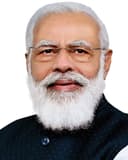 Narendra ModiBJPPrime Minister since 2014. Targeted delivery welfare — free grain, gas, housing — beside a strong centre and an explicit Hindu-nationalist programme: Article 370 gone, CAA, Ram Mandir.
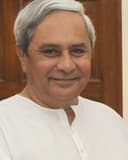 Naveen PatnaikBJDOdisha's Chief Minister for 24 years, 2000–2024. Universal-leaning health cover and ₹1 rice paid for out of mineral rents, a state kept communally quiet and evacuated ahead of cyclones — governed at arm's length through an officer, and voting with Delhi on nearly every bill that mattered.
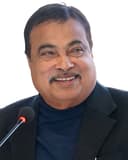 Nitin GadkariBJPUnion Road Transport Minister since 2014 and a former BJP president. The national highway network grew by 60% on his watch and ethanol blending became policy — from the one senior BJP figure whose public idiom is tarmac, jobs and road deaths rather than identity.
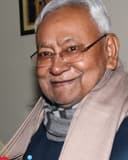 Nitish KumarJD(U)Bihar Chief Minister across two decades and both alliances. The 2023 caste survey, prohibition and women's-quota experiments, delivered through repeated coalition switches that keep his politics deliberately unfixed.
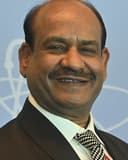 Om BirlaBJPLok Sabha Speaker since 2019 and re-elected in 2024, a former Kota civic leader and Rajasthan Assembly member. Presided over 100 opposition MPs suspended in the December 2023 winter session — a Lok Sabha record beating 1989's 63 — and the fastest passage of India's rewritten criminal codes, while building a paperless 'Digital Parliament'.
 Omar AbdullahJKNCJammu and Kashmir Chief Minister 2009-15, detained under the Public Safety Act after Article 370 went, and back in office since October 2024 — heading a government that does not control its own police, with statehood restoration as its whole programme.
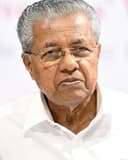 Pinarayi VijayanCPI(M)Kerala Chief Minister since 2016, the CPI(M)'s strongest remaining executive. Public health and welfare pensions beside industrial-corridor pragmatism, in a centralised style his own left critics name.
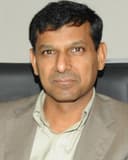 Raghuram RajanRBI Governor 2013-16, now a University of Chicago economist. 'Breaking the Mould' (2023, with Rohit Lamba) argues India under-invests in health, education and institutional independence — a case against industrial-policy shortcuts, for competitive federalism among states, made from outside any political party.
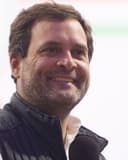 Rahul GandhiINCCongress's face across three general elections, Leader of the Opposition since 2024. Caste census and minimum-income guarantees on one side; 'Union of States' federalism and the Pegasus–PMLA civil-liberties fight on the other.
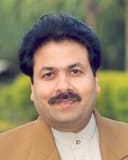 Rajeev ShuklaINCCongress Rajya Sabha MP for Chhattisgarh, a former Union minister and television political commentator who chaired the IPL from 2011, served roughly ten weeks in 2025 as acting BCCI president through the India-Pakistan Asia Cup, and remains the board's vice-president — cricket administration, not legislation, is where his public record actually sits.
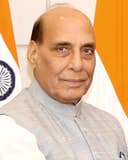 Rajnath SinghBJPDefence Minister since 2019 and Home Minister before that; Uttar Pradesh Chief Minister in 2000-02 and a former BJP president. Oversaw Operation Sindoor's May 2025 strikes and the Agnipath recruitment overhaul, inside a defence build-out that has cut imports and lifted exports fifty-fold.
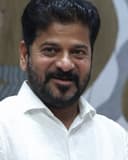 Revanth ReddyINCTelangana's Chief Minister since December 2023 and the Congress's most consequential state experiment. A caste survey of three and a half crore people and then a 42% Backward Classes quota the courts stayed and Delhi never cleared — run alongside free bus travel, a ₹20,000 crore loan waiver and a hard growth-first line on land.
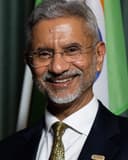 S. JaishankarBJPExternal Affairs Minister since 2019 and a career diplomat before that — Foreign Secretary, then Ambassador to the US and China. Operation Sindoor's May 2025 diplomacy, new trade deals with the UAE and Australia, and 'Why Bharat Matters', his case for a civilizational Indian foreign policy.
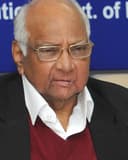 Sharad PawarNCP(SP)Maharashtra Chief Minister four times since age 37, Union Defence and Agriculture Minister, founder of the NCP. India's most durable coalition broker, still leading the faction his nephew Ajit split off in 2023 — Ajit died in a January 2026 plane crash; his widow Sunetra now leads that faction as Deputy CM.
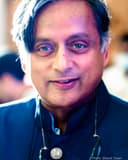 Shashi TharoorINCThiruvananthapuram's MP across four terms and a former UN under-secretary-general. The Section 377 bills Parliament refused to take up, an anti-discrimination bill nobody else would draft, and two books arguing civic nationalism against Hindutva — from a Congressman whose praise for Modi's diplomacy keeps putting him at odds with his own party.
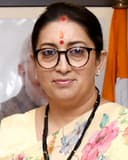 Smriti IraniBJPTextiles and Women & Child Development Minister, 2019-24, after unseating Rahul Gandhi from Amethi in 2019 — then losing the seat back to Congress in 2024. Returned in 2026 as BJP general secretary, given charge of Uttar Pradesh ahead of the 2027 assembly election.
- Tejashwi YadavRJDBihar's Leader of the Opposition and twice its Deputy Chief Minister. The 2023 caste survey and the 65% quota raise came out of his term; the 2025 campaign added the largest cash-and-jobs offer any state opposition has made — and a promise to unwind Nitish's liquor ban.
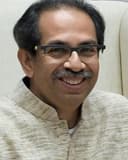 Uddhav ThackeraySS(UBT)Maharashtra Chief Minister 2019-22 at the head of an alliance with Congress and the NCP; since the 2022 split — in which the Election Commission awarded Shinde the party name and symbol — leader of the smaller Sena faction that stayed with him. Marathi-first federalism and a pluralist turn, argued from a party built on the opposite.
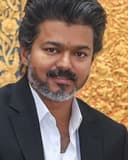 VijayTVKTVK's founder, sworn in as Tamil Nadu's Chief Minister on 10 May 2026 after ending six decades of DMK-AIADMK rule. A ₹6,000 crore crop-loan waiver and 717 liquor shops shut near schools and temples mark his first 100 days — as the CBI's Karur stampede probe into him continues.
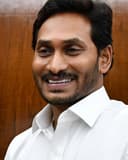 Y.S. Jagan Mohan ReddyYSRCPAndhra Pradesh Chief Minister 2019–2024. Navaratnalu pushed about ₹2.7 lakh crore of direct transfers into households while state debt more than doubled — and the same term abandoned Amaravati, reopened signed power contracts and charged opposition news channels with sedition.
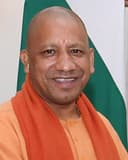 Yogi AdityanathBJPUttar Pradesh Chief Minister since 2017 and head of the Gorakhnath math. 'Bulldozer' enforcement, the anti-conversion law and open majoritarian rhetoric, alongside free-grain welfare and investor summits.
In history
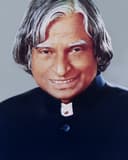 A.P.J. Abdul Kalam1931–2015DRDO and ISRO's 'Missile Man', then President 2002–07 by NDA-UPA consensus. Returned the Office of Profit Bill for reconsideration — his one real institutional stand — while mostly leaving mercy petitions undecided, in a presidency built on consensus rather than confrontation.
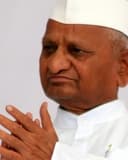 Anna HazareRalegan Siddhi's watershed-and-liquor-ban village model made him a name before Delhi did; the 2011 Ramlila Maidan fast forced a Lokpal resolution through Parliament. Wants gram sabhas placed above Parliament itself — and disowned the party Arvind Kejriwal built from that same movement.
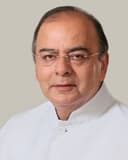 Arun Jaitley1952–2019Finance Minister 2014–19: pushed GST through the Council and wrote the Insolvency and Bankruptcy Code. Jailed nineteen months in the Emergency for burning Indira Gandhi's effigy, he later defended Aadhaar in court, and his last public words praised Article 370's abrogation as 'monumental'.
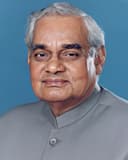 Atal Bihari Vajpayee1924–2018Prime Minister in 1996 and again from 1998 to 2004, the Jana Sangh's founding generation finally in office. Pokhran-II and the Lahore bus, the largest privatisation drive any Indian government has run, and a coalition that kept the Ram temple, Article 370 and the uniform civil code off its own agenda for six years.
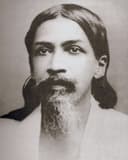 Aurobindo Ghose1872–1950Bande Mataram's editor and the Extremists' theorist, until the Alipore Bomb Case and his withdrawal to Pondicherry in 1910. 'The Doctrine of Passive Resistance' (1907) supplied the boycott its strategy; the Uttarpara Speech of 1909 — 'the Sanatan Dharma, that is nationalism' — supplied the Hindu-spiritual nationalism others built on.
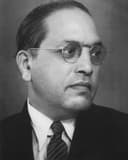 B.R. Ambedkar1891–1956Chairman of the Constitution's drafting committee and the century's sharpest critic of caste. State-led remedy — reservations, the Hindu Code, labour law — argued through constitutional method; converted to Buddhism in 1956.
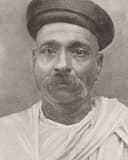 Bal Gangadhar Tilak1856–1920'Lokmanya' — Kesari's editor, the Extremists' leader, and the source of 'Swaraj is my birthright and I shall have it'. Mass politics built through the Ganapati and Shivaji festivals and six years in Mandalay for sedition; also the most prominent Indian opponent of the Age of Consent Bill of 1891.
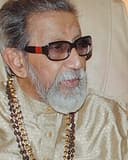 Bal Thackeray1926–2012Shiv Sena's founder, 1966, who never held office and never needed to — chief ministers answered to him by phone. Built a career on 'sons of the soil' hiring and, later, open Hindutva; the Srikrishna Commission named him a director of the 1992–93 Bombay riots.
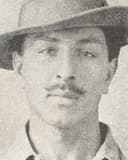 Bhagat Singh1907–1931Revolutionary executed at 23. The assembly bomb as 'a voice to the deaf', prison hunger strikes, and the essays — 'Why I Am an Atheist' — that made him the socialist, rationalist icon both flanks now claim.
- C. Rajagopalachari1878–1972Last Governor-General, twice head of government in Madras, and at eighty the founder of the Swatantra Party — the only sustained free-market opposition India has had, built against what he named the 'licence-permit-quota raj'. A Gandhian moralist in everything else: prohibition, temple entry, and the hereditary-education scheme that ended his career.
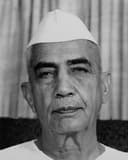 Charan Singh1902–1987Prime Minister for less than six months, and before that the man who abolished zamindari in Uttar Pradesh and spent thirty years arguing that India's plans were an urban conspiracy against the peasant. The backward-caste bloc of north Indian politics is largely his construction.
- Deendayal Upadhyaya1916–1968Jana Sangh's general secretary for fifteen years and the author of Integral Humanism, the four Bombay lectures of April 1965 that the BJP still names as its doctrine. Swadeshi economics and Antyodaya on one side; Bharatiya culture as the nation's soul, an organic reading of varna and an explicitly unitary state on the other.
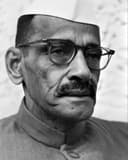 Gulzarilal Nanda1898–1998Twice caretaker Prime Minister for under three weeks each — after Nehru's death in 1964, after Shastri's in 1966 — but built the Planning Commission he ran for a decade, and spent 1922–46 running Ahmedabad's Gandhian textile union before that, negotiation over confrontation, always.
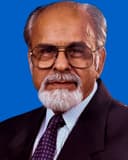 I.K. Gujral1919–2012Prime Minister 1997–98, remembered for the Gujral Doctrine of unreciprocated generosity toward smaller neighbours. As Indira's Information Minister in 1975 he refused Sanjay Gandhi's censorship orders and was exiled to Moscow for it; resigned rather than drop the DMK in 1997.
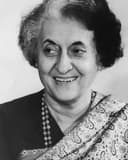 Indira Gandhi1917–1984Prime Minister 1966–77 and 1980–84. Bank nationalisation and 'Garibi Hatao' on one ledger; the Emergency, party centralisation and the routine use of Article 356 on the other.
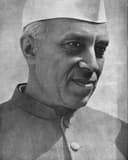 Jawaharlal Nehru1889–1964First Prime Minister, 1947–64. Planning commissions, public-sector heavy industry, non-alignment and a secular constitutional order — with the strong centre that came with all four.
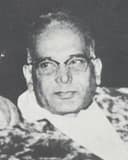 Jayaprakash Narayan1902–1979Congress socialist, then Gandhian, then the man who called for Sampoorna Kranti at Patna's Gandhi Maidan in June 1974 and became the Emergency's most prominent prisoner. His life's argument was against concentrated power in any form — party, state or centre.
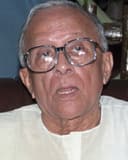 Jyoti Basu1914–2010West Bengal's Chief Minister for twenty-three unbroken years, 1977–2000, and the Left Front's face. Sharecropper registration and elected panchayats redistributed rural power at a scale no other state matched; Marichjhapi and the party's grip on the state machinery sit on the other side of the ledger.
- Kanshi Ram1934–2006Founder of BAMCEF, DS-4 and the Bahujan Samaj Party, and the organiser who turned Ambedkar's constituency into a bloc that could take office. 'Jiski jitni sankhya bhari, uski utni bhagidari' was the entire programme; he never headed a government, and everything else in his politics was made subordinate to it.
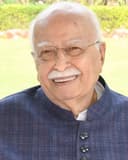 L.K. AdvaniArchitect of the 1990 Ram Rath Yatra, arrested by Lalu Prasad Yadav en route; Home Minister 1998–2004 who revived preventive detention through POTA. Acquitted in the 2020 Babri Masjid verdict — but in 2005 he called Jinnah 'secular' and lost the BJP presidency over it.
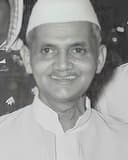 Lal Bahadur Shastri1904–1966Prime Minister 1964–66. 'Jai Jawan Jai Kisan' bound soldier and farmer into one idea of the national interest; he set the Green Revolution in motion, steered the country through the 1965 war, and governed with an austerity and personal integrity still cited as the standard.
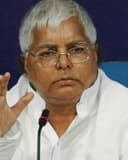 Lalu Prasad YadavBihar's Chief Minister through the 1990s, RJD's founder and Railway Minister 2004–09. Mandal's most theatrical beneficiary: he arrested L.K. Advani in 1990 to stop the Ram Rath Yatra and gave Bihar's backward castes and Muslims a voice they had never had, over a governing record his opponents named 'jungle raj'.
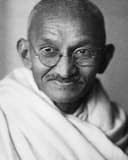 Mahatma Gandhi1869–1948The independence movement's organising centre. Village-first economics, trusteeship instead of class war, religious pluralism held against Partition — and discipline enforced through his own fasts more than any office.
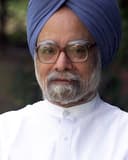 Manmohan Singh1932–2024Finance Minister of the 1991 reforms and Prime Minister 2004–14. His government built India's rights-based welfare architecture — work, information, education, food and forests all written as justiciable law — while carrying UAPA's expansion and Section 66A on the same ledger.
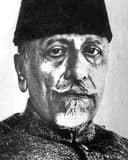 Maulana Abul Kalam Azad1888–1958Congress President through the war years and the Partition negotiations, and independent India's first Education Minister for eleven years. He argued from within Islam that a religious partition was incoherent and opposed it to the end, then built the UGC, the IITs and the national academies.
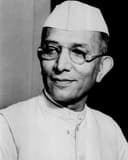 Morarji Desai1896–1995Prime Minister 1977–79, and the first non-Congress one. His government dismantled the Emergency's legal architecture through the 44th Amendment and the Shah Commission; a Gandhian puritan on drink and personal conduct, and the fiscal conservative who lost the Finance portfolio to Indira Gandhi over bank nationalisation.
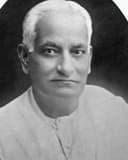 Motilal Nehru1861–1931Twice Congress President — 1919 and 1928 — and, with C.R. Das, founder of the Swaraj Party that fought British rule from inside the legislatures it meant to wreck. His 1928 constitutional report chose joint electorates and dominion status over the Muslim League's separate seats.
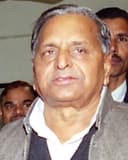 Mulayam Singh Yadav1939–2022Founder of the Samajwadi Party in 1992, three times Uttar Pradesh Chief Minister and Defence Minister in the United Front. A Lohiaite who made backward-caste and Muslim assertion the state's central axis, and who ordered the 1990 Ayodhya firing that has defined him in the argument ever since.
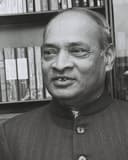 P.V. Narasimha Rao1921–2004Prime Minister 1991–96, running a minority government that dismantled the licence raj in a single summer. He also put Mandal's 27% into force and wrote the Places of Worship Act — and presided over the demolition of the Babri Masjid.
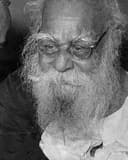 Periyar E.V. Ramasamy1879–1973Founder of the Self-Respect Movement and source of Dravidian politics. Anti-caste rationalism pushed to its limits — atheism, pioneering quotas in Madras, and open scepticism that a Delhi-centred union could be just.
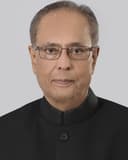 Pranab Mukherjee1935–2020Congress's crisis manager for four decades — Finance Minister under Indira and again under Manmohan Singh, President 2012–17. Overrode his party's advisers to tax Vodafone retrospectively in 2012, then, as a former President, told the RSS at its own headquarters that pluralism was India's soul.
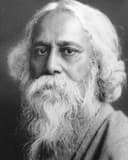 Rabindranath Tagore1861–1941Poet, Nobel laureate, and the sharpest Indian critic of nationalism itself — the 1917 lectures call the Nation 'the organised self-interest of a whole people, where it is least human and least spiritual'. He joined the Swadeshi agitation in 1905 and broke with it, renounced his knighthood after Jallianwala Bagh, and built Visva-Bharati and Sriniketan as alternatives to both the colonial state and the national one.
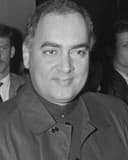 Rajiv Gandhi1944–1991Prime Minister 1984–89, elected on the largest majority in Indian history. Computers, telecom and the first cracks in the licence raj on one ledger; the Shah Bano reversal, the Babri Masjid locks and TADA on the other — and 1984 itself, answered with the line about the earth shaking when a big tree falls.
- Ram Manohar Lohia1910–1967Socialist theorist and the fiercest opponent Nehru faced across the floor. He demanded 60% of every post for backward castes, Dalits, Adivasis, backward minorities and women two decades before Mandal, and pressed 'Angrezi Hatao' and a four-tier Chaukhambha state against the Delhi that ran both.
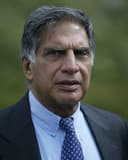 Ratan Tata1937–2024Tata Sons chairman 1991–2012 and briefly again in 2016–17. Moved the Nano plant from Singur to Sanand after Mamata Banerjee's dharna, called demonetisation one of India's three most important reforms, and chaired a group whose parent, Tata Sons, is about two-thirds owned by the philanthropic Tata Trusts.
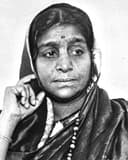 Sarojini Naidu1879–1949Poet, first Indian woman to head Congress (1925), and first woman to govern an Indian state as United Provinces Governor (1947–49). Led the Dharasana salt raid after Gandhi's 1930 arrest, and campaigned throughout against child marriage, purdah and for Hindu-Muslim unity.
- Sheikh Abdullah1905–1982Kashmir's dominant figure for half a century, the 'Sher-e-Kashmir'. Naya Kashmir in 1944 and the land-to-the-tiller Big Landed Estates Abolition Act of 1950 went further than any other Indian state dared; Article 370's autonomy was the cause he was jailed for eleven years after his dismissal in 1953, and then bargained away in 1975.
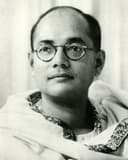 Subhas Chandra Bose1897–1945Congress president in 1938 and again in 1939 before breaking with Gandhi, then head of the Azad Hind provisional government and the Indian National Army. Socialist planning and a deliberately inter-religious army with a women's combat regiment — argued alongside an openly stated case for authoritarian rule in freedom's first decades.
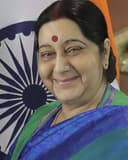 Sushma Swaraj1952–2019Seven-time parliamentarian, Delhi's Chief Minister for under two months in 1998, Leader of the Opposition, and External Affairs Minister 2014–19. She turned the passport counter and a Twitter handle into instruments of the foreign ministry; her last public words, the day after Article 370's abrogation, thanked the Prime Minister for it.
 Syama Prasad Mukherjee1901–1953Hindu Mahasabha president, then founder of the Bharatiya Jana Sangh in 1951 after resigning Nehru's cabinet over the Delhi Pact. Entered Kashmir without a permit to fight Article 370's 'two constitutions, two flags' and died in Srinagar detention six weeks later, in 1953.
 V.D. Savarkar1883–1966Author of 'Hindutva' (1923) — the nation defined by Hindu peoplehood — and Hindu Mahasabha president. An atheist rationalist against caste orthodoxy who nonetheless built the majoritarian case that outlived him.
 V.K. Krishna Menon1896–1974Non-alignment's chief architect at the UN and India's High Commissioner in London before Defence Minister 1957–62. Ordered Goa's annexation in 1961, then resigned after China's 1962 war exposed a defence ministry he had run by centralising decisions and sidelining generals himself.
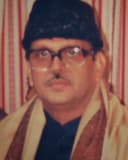 V.P. Singh1931–2008Prime Minister for eleven months, December 1989 to November 1990. Rajiv Gandhi's Finance Minister turned his chief accuser over Bofors, then the man who implemented the Mandal Commission's 27% reservation in August 1990 and stood behind the arrest of L.K. Advani in October rather than let the Ram Rath Yatra through — losing his government weeks later.
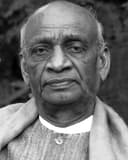 Vallabhbhai Patel1875–1950Deputy Prime Minister and Home Minister who merged over 560 princely states into the Union. Administrative consolidation, patron of the IAS, and the Congress right's anchor on property and order.
And where do you stand?
Answer the same trade-offs yourself and get your seven readings, on the scales you just read.
Free · Anonymous · No account