


In history
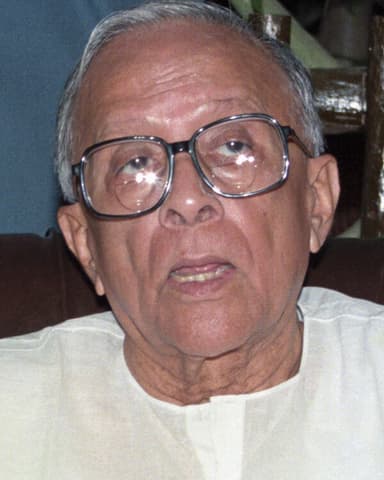
Jyoti Basu
1914–2010
West Bengal's Chief Minister for twenty-three unbroken years, 1977–2000, and the Left Front's face. Sharecropper registration and elected panchayats redistributed rural power at a scale no other state matched; Marichjhapi and the party's grip on the state machinery sit on the other side of the ledger.
Furthest from the middle on Nation, toward Pluralist.
Where they stand
Jyoti Basu on each of the seven scales, from one pole to the other.
Welfare
−7.5Expansive state provisionMinimal/targeted provisionMarkets
−7.0State-led developmentMarket-led developmentRecognition
−5.0Formal equalityGroup remediesNation
−9.0PluralistMajoritarianAuthority
0.0Civil libertiesStrong stateCulture
−3.0Personal autonomyTraditional normsFederalism
+9.0CentreStates
The record, axis by axis
Every placement is scored on what was said and done — manifestos, legislation, the governing record — and calibrated against the same trade-offs the quiz asks about.
Redistribution of assets rather than transfers: Operation Barga registered about 1.5 million sharecroppers from 1978 and ceiling-surplus land reached millions of households — while Bengal's health and schooling indicators stayed middling across his 23 years
A Politburo member who opposed the 1991 reforms and defended the public sector, but signed the 1994 West Bengal industrial policy that invited private and foreign capital back and personally led investment delegations abroad
Class-first to the end: the Left treated Mandal in 1990 as a diversion, Bengal's OBC reservation stayed at 7% throughout his tenure, and Sachar later found the state's Muslims among India's worst represented in government jobs
Called the Babri demolition the blackest day and demanded the BJP state governments' dismissal in 1992; Bengal saw no major communal riot under him, and his party's resolutions named the RSS as fascist
Freed the Naxalite and Emergency political prisoners on taking office in 1977, having been jailed himself as a communist organiser in 1948-49 — against the 1979 Marichjhapi blockade and eviction of Dalit refugees and the police firing of 21 July 1993 that killed thirteen
Atheist Marxist with no traditionalist programme, implementing the 73rd Amendment's one-third panchayat reservation for women from 1993 as the centre required — but family-law reform and personal autonomy were never his government's subject
The Left Front's 1977 memorandum on restructuring Centre-state relations, the 1983 Srinagar conclave of opposition Chief Ministers he helped convene, and a two-decade campaign against Article 356 and the Governor's office
And where do you stand?
Answer the same trade-offs yourself and get your seven readings, on the scales you just read.
Free · Anonymous · No account