


In history
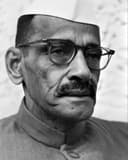
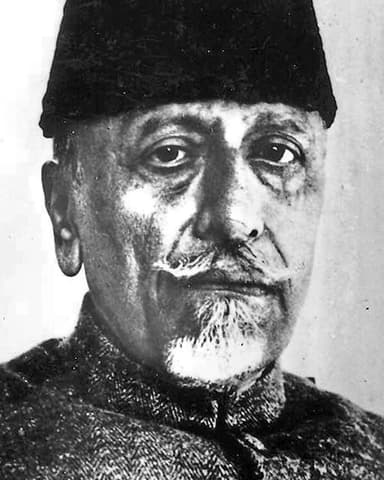
Maulana Abul Kalam Azad
1888–1958
Congress President through the war years and the Partition negotiations, and independent India's first Education Minister for eleven years. He argued from within Islam that a religious partition was incoherent and opposed it to the end, then built the UGC, the IITs and the national academies.
Furthest from the middle on Nation, toward Pluralist.
Where they stand
Maulana Abul Kalam Azad on each of the seven scales, from one pole to the other.
Welfare
−7.0Expansive state provisionMinimal/targeted provisionMarkets
−6.0State-led developmentMarket-led developmentRecognition
−2.0Formal equalityGroup remediesNation
−9.5PluralistMajoritarianAuthority
−4.0Civil libertiesStrong stateCulture
+1.0Personal autonomyTraditional normsFederalism
−1.0CentreStates
The record, axis by axis
Every placement is scored on what was said and done — manifestos, legislation, the governing record — and calibrated against the same trade-offs the quiz asks about.
Eleven years at Education building provision as a state obligation — the UGC in 1953, the first IIT at Kharagpur in 1951, the Sahitya, Lalit Kala and Sangeet Natak Akademis — and a standing insistence that Article 45's free compulsory education to fourteen carried a deadline rather than an aspiration
Sat in Cabinet through the Industrial Policy Resolutions of 1948 and 1956 and the First Plan without dissent, and left no position on ownership or planning distinct from Nehru's
The most prominent Muslim opponent of separate electorates and of Muslim politics organised as a separate bloc — while the Congress line he shaped on minority educational and cultural rights is the ancestor of Article 30's protections, and he defended Urdu's standing as an Indian language throughout
Congress President from 1940 through Quit India, Cripps and the Cabinet Mission; Tarjuman al-Quran argues the essential unity of religions from scripture, making a religious partition incoherent on its own terms, and on 23 October 1947 he stood at the Jama Masjid and told them to stay
Al-Hilal banned in 1914 and Al-Balagh in 1916, interned at Ranchi 1916-20 and held at Ahmednagar Fort 1942-45 — a life on the receiving end of preventive detention — against a Cabinet seat in the government that passed the Preventive Detention Act 1950 and the First Amendment 1951
Moved from a conservative scholarly formation to the rationalist reinterpretation of Tarjuman al-Quran and pushed women's education and universal schooling — but championed no personal-law reform, for his own community or any other
Sat through the Nehruvian centralisation without dissent — no objection to Article 356 or Planning Commission overrides of state priorities, and central institutions built in a subject then on the State List — against his advocacy of the Cabinet Mission Plan's weak centre, whose repudiation he blamed for Partition
And where do you stand?
Answer the same trade-offs yourself and get your seven readings, on the scales you just read.
Free · Anonymous · No account