


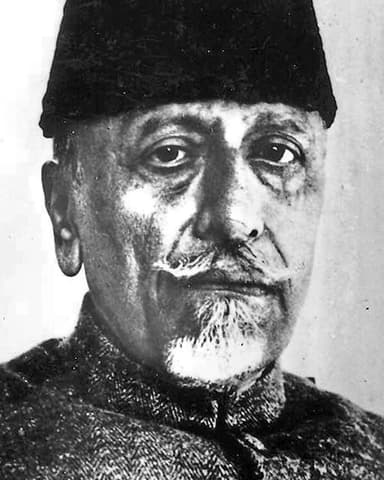
इतिहास में
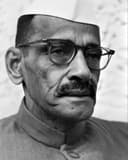
मौलाना अबुल कलाम आज़ाद
1888–1958
युद्ध के वर्षों और बँटवारे की बातचीत के दौर में कांग्रेस अध्यक्ष, और आज़ाद भारत के पहले शिक्षा मंत्री — ग्यारह साल। इस्लाम के भीतर से यह दलील दी कि धार्मिक बँटवारा बेतुका है और आख़िर तक उसका विरोध किया, फिर UGC, IIT और राष्ट्रीय अकादमियाँ खड़ी कीं।
बीच से सबसे दूर राष्ट्र पर — बहुलतावादी की तरफ़।
ये कहाँ खड़े हैं
मौलाना अबुल कलाम आज़ाद सातों पैमानों पर, एक छोर से दूसरे छोर तक।
रिकॉर्ड, पैमाने दर पैमाने
हर जगह इस आधार पर तय हुई है कि क्या कहा और क्या किया गया — घोषणापत्र, क़ानून, सरकार चलाने का रिकॉर्ड — और उन्हीं सवालों पर परखी गई है जो यह क्विज़ पूछता है।
सबूत का हवाला अंग्रेज़ी में
Eleven years at Education building provision as a state obligation — the UGC in 1953, the first IIT at Kharagpur in 1951, the Sahitya, Lalit Kala and Sangeet Natak Akademis — and a standing insistence that Article 45's free compulsory education to fourteen carried a deadline rather than an aspiration
Sat in Cabinet through the Industrial Policy Resolutions of 1948 and 1956 and the First Plan without dissent, and left no position on ownership or planning distinct from Nehru's
The most prominent Muslim opponent of separate electorates and of Muslim politics organised as a separate bloc — while the Congress line he shaped on minority educational and cultural rights is the ancestor of Article 30's protections, and he defended Urdu's standing as an Indian language throughout
Congress President from 1940 through Quit India, Cripps and the Cabinet Mission; Tarjuman al-Quran argues the essential unity of religions from scripture, making a religious partition incoherent on its own terms, and on 23 October 1947 he stood at the Jama Masjid and told them to stay
Al-Hilal banned in 1914 and Al-Balagh in 1916, interned at Ranchi 1916-20 and held at Ahmednagar Fort 1942-45 — a life on the receiving end of preventive detention — against a Cabinet seat in the government that passed the Preventive Detention Act 1950 and the First Amendment 1951
Moved from a conservative scholarly formation to the rationalist reinterpretation of Tarjuman al-Quran and pushed women's education and universal schooling — but championed no personal-law reform, for his own community or any other
Sat through the Nehruvian centralisation without dissent — no objection to Article 356 or Planning Commission overrides of state priorities, and central institutions built in a subject then on the State List — against his advocacy of the Cabinet Mission Plan's weak centre, whose repudiation he blamed for Partition
और आप कहाँ खड़े हैं?
यही सवाल ख़ुद हल कीजिए और अपनी सात रीडिंग पाइए — उन्हीं पैमानों पर, जो आपने अभी पढ़े।
मुफ़्त · बिना पहचान · अकाउंट नहीं