


In history
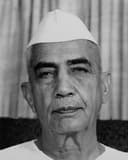
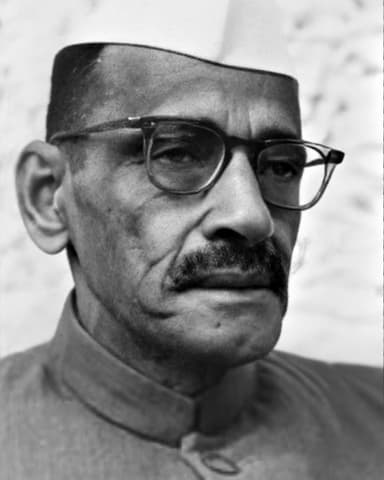
Gulzarilal Nanda
1898–1998
Twice caretaker Prime Minister for under three weeks each — after Nehru's death in 1964, after Shastri's in 1966 — but built the Planning Commission he ran for a decade, and spent 1922–46 running Ahmedabad's Gandhian textile union before that, negotiation over confrontation, always.
Furthest from the middle on Markets, toward State-led development.
Where they stand
Gulzarilal Nanda on each of the seven scales, from one pole to the other.
Welfare
−6.0Expansive state provisionMinimal/targeted provisionMarkets
−7.0State-led developmentMarket-led developmentRecognition
−1.0Formal equalityGroup remediesNation
−3.0PluralistMajoritarianAuthority
−2.0Civil libertiesStrong stateCulture
+1.0Personal autonomyTraditional normsFederalism
−2.0CentreStates
The record, axis by axis
Every placement is scored on what was said and done — manifestos, legislation, the governing record — and calibrated against the same trade-offs the quiz asks about.
Deputy Chairman of the Planning Commission (17 February 1953 – 21 September 1963) and Union Labour Minister across the 1950s–60s, a central administrator of the Nehruvian welfare-and-planning apparatus, though never its architect
The Planning Commission he ran for a decade was the institutional core of state-led industrial licensing and Five-Year-Plan allocation
No distinct caste-quota record; his organising life was built on labour and class solidarity within the Ahmedabad textile industry, not caste
No distinct record; served the secular-Congress consensus loyally as a two-time caretaker without articulating an independent position
As Acting Prime Minister for two brief spells (27 May–9 June 1964 and 11–24 January 1966, a fortnight combined) he never had the time or mandate to exercise independent authority; his defining trait is 22 years (1922–46) as Secretary of Ahmedabad's Gandhian Textile Labour Association, an arbitration-based union model explicitly built against confrontational or Marxist labour militancy — a consensus-seeking, institutionally respectful disposition rather than either pole
Personally austere and Gandhian in habit, with no legislative culture-war record of his own
No distinct position found; administered the Nehruvian centralising consensus (Planning Commission allocations overriding state priorities) without recorded dissent
And where do you stand?
Answer the same trade-offs yourself and get your seven readings, on the scales you just read.
Free · Anonymous · No account