


In history
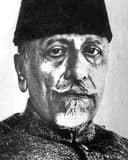
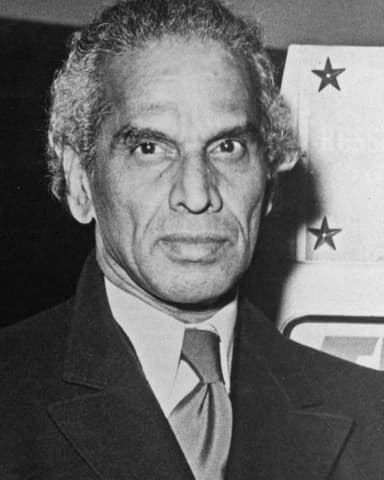
V.K. Krishna Menon
1896–1974
Non-alignment's chief architect at the UN and India's High Commissioner in London before Defence Minister 1957–62. Ordered Goa's annexation in 1961, then resigned after China's 1962 war exposed a defence ministry he had run by centralising decisions and sidelining generals himself.
Furthest from the middle on Nation, toward Pluralist.
Where they stand
V.K. Krishna Menon on each of the seven scales, from one pole to the other.
Welfare
−3.0Expansive state provisionMinimal/targeted provisionMarkets
−4.0State-led developmentMarket-led developmentRecognition
0.0Formal equalityGroup remediesNation
−6.0PluralistMajoritarianAuthority
+6.0Civil libertiesStrong stateCulture
0.0Personal autonomyTraditional normsFederalism
−1.0CentreStates
The record, axis by axis
Every placement is scored on what was said and done — manifestos, legislation, the governing record — and calibrated against the same trade-offs the quiz asks about.
A lifelong, on-record Fabian socialist — formed at the LSE under Harold Laski, a Labour councillor on London's St Pancras Borough Council (1934–47) — which is a real, professed public position and not invented; but he never held a domestic welfare portfolio in India to enact it, so this is scored as doctrine, not as an executive record, and kept well short of the magnitude given to figures who actually built welfare institutions
The same Fabian-socialist formation, plus a close Nehruvian alliance on state-led industrialisation, is real and on record — but again without a domestic economic portfolio of his own to translate doctrine into policy, so this too is scored as a stated position rather than an executive act
No record; his career was built entirely in foreign and defence policy, where caste-quota questions never arose — a genuinely thin axis for him, not a gap to invent around
Coined the term non-alignment and built India League activism (from 1928, as secretary from 1929) around anti-colonial, secular-internationalist lines with no communal content; ordered the December 1961 Indian annexation of Goa, a forcible end to Portuguese colonial rule that asserted national territorial integration but on anti-colonial rather than majoritarian-identity grounds
The defining axis: as Defence Minister (1957–62) he ran the ministry through personal, centralising control — Army Chief General K.S. Thimayya submitted (and then withdrew) his resignation in 31 August 1959 over a dispute with Menon, and officers seen as close to him were promoted past their competence — a management style most historians blame, at least in part, for the military's 1962 unpreparedness; he was forced to resign in October 1962, and the Goa operation shows the same comfort with decisive, centralised use of force
No record; not a domestic social-policy figure
No developed Centre-state record; a foreign- and defence-policy figure by career, with the default low-confidence Nehruvian-centrist baseline
And where do you stand?
Answer the same trade-offs yourself and get your seven readings, on the scales you just read.
Free · Anonymous · No account