


In history
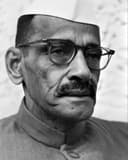
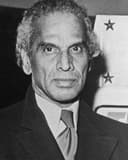
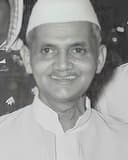
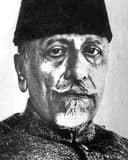
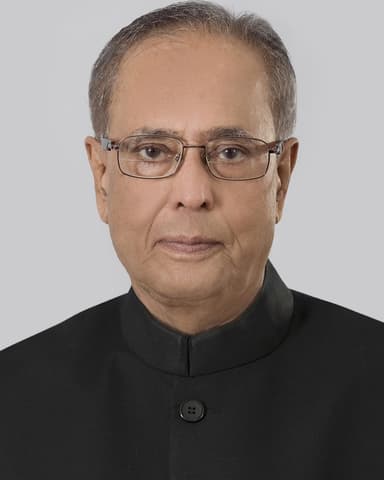
Pranab Mukherjee
1935–2020
Congress's crisis manager for four decades — Finance Minister under Indira and again under Manmohan Singh, President 2012–17. Overrode his party's advisers to tax Vodafone retrospectively in 2012, then, as a former President, told the RSS at its own headquarters that pluralism was India's soul.
Furthest from the middle on Nation, toward Pluralist.
Where they stand
Pranab Mukherjee on each of the seven scales, from one pole to the other.
Welfare
−4.0Expansive state provisionMinimal/targeted provisionMarkets
−5.0State-led developmentMarket-led developmentRecognition
−2.0Formal equalityGroup remediesNation
−6.0PluralistMajoritarianAuthority
0.0Civil libertiesStrong stateCulture
0.0Personal autonomyTraditional normsFederalism
−4.0CentreStates
The record, axis by axis
Every placement is scored on what was said and done — manifestos, legislation, the governing record — and calibrated against the same trade-offs the quiz asks about.
No signature welfare scheme of his own across decades of Congress cabinets — a consensus administrator of the party's evolving line rather than its author
As Finance Minister in 2012–13, proposed a retrospective amendment to Section 2(47) of the Income Tax Act specifically to override the Supreme Court's Vodafone ruling and tax the Vodafone-Hutch deal, doing so over the objections of Sonia Gandhi, Kapil Sibal and P. Chidambaram, who warned it would damage FDI sentiment — a genuinely dirigiste, market-unpredictable act, eventually reversed by the 2021 Taxation Laws (Amendment) Act, and the clearest evidence that he sat to the statist side of his own party's liberalising wing
No distinct personal record beyond Congress's standard SC/ST-plus-EWS framework, administered rather than authored
A Congress lifer from the party's secular-establishment mainstream across four decades in cabinet — Finance Minister under both Indira Gandhi and Manmohan Singh, plus stints at Defence and External Affairs — with no personal record of communal politics of his own, and a reputation across the political spectrum as the party's non-ideological trouble-shooter rather than an ideologue on religion-and-state questions. The capstone, and the one sharply worded data point in an otherwise quiet record: as a former President and private citizen, he addressed the RSS's Tritiya Varsh graduation ceremony at its Nagpur headquarters on 7 June 2018 and told the gathering, 'We accept and respect our pluralism and celebrate our diversity... any attempt to define our nation through religion, dogma or intolerance will only fade our existence' — a direct pluralist rebuttal delivered inside the RSS's own house, though his visit to RSS founder Hedgewar's birthplace beforehand drew criticism from secular commentators as itself lending the organisation legitimacy
A junior minister for Revenue and Banking under Indira Gandhi during the Emergency (1975–77), part of a government later charged with 'Emergency excesses' in general terms, but with no specific repressive act personally documented against him; as President (2012–17) read as procedurally cautious rather than assertive, with no notable bill-return or mercy-petition controversy — a record that supports a centrist placement, not a lean toward the strong-state pole
No distinct record found on personal-autonomy-versus-tradition questions
As President, generally deferential to the central government's recommendations on Governor's-rule referrals, and a career Congress high-command figure comfortable within the party's traditionally centre-leaning institutional culture
And where do you stand?
Answer the same trade-offs yourself and get your seven readings, on the scales you just read.
Free · Anonymous · No account