


In history
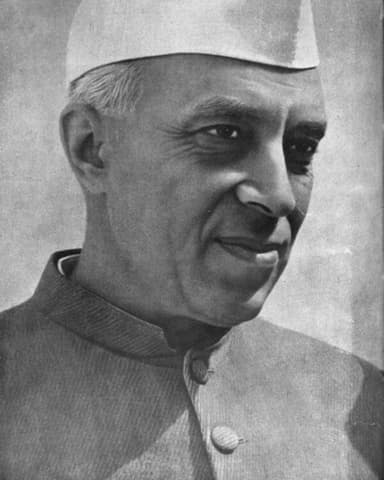
Jawaharlal Nehru
1889–1964
First Prime Minister, 1947–64. Planning commissions, public-sector heavy industry, non-alignment and a secular constitutional order — with the strong centre that came with all four.
Furthest from the middle on Nation, toward Pluralist.
Where they stand
Jawaharlal Nehru on each of the seven scales, from one pole to the other.
Welfare
−6.0Expansive state provisionMinimal/targeted provisionMarkets
−8.0State-led developmentMarket-led developmentRecognition
−4.0Formal equalityGroup remediesNation
−9.0PluralistMajoritarianAuthority
−1.0Civil libertiesStrong stateCulture
−7.0Personal autonomyTraditional normsFederalism
−6.0CentreStates
The record, axis by axis
Every placement is scored on what was said and done — manifestos, legislation, the governing record — and calibrated against the same trade-offs the quiz asks about.
Five-Year Plans built IITs, AIIMS and the public scientific estate, though actual social spending stayed low against a growth-first industrial priority
Industrial Policy Resolution 1956 reserved Schedule A sectors for the state, plus the Planning Commission and industrial licensing — while never collectivising agriculture
His 1961 letter to Chief Ministers: 'I dislike any kind of reservation'; he shelved the Kalelkar Commission in 1955 while keeping SC/ST provisions and defending Article 30
Refused state association with the Somnath reconstruction and wrote to Rajendra Prasad about it; opposed Hindu Rashtra as an idea throughout
First Amendment 1951 widened speech restrictions, the Preventive Detention Act 1950, and the 1959 dismissal of Kerala's elected Communist government — against a genuine tolerance of press and opposition
Pushed the Hindu Code Bill through in four parts in 1955-56 after Ambedkar's resignation, and made 'scientific temper' a constitutional duty
Planning Commission allocations overrode state priorities and Article 356 was used against Kerala — though he conceded linguistic states in 1956 against his own initial resistance
And where do you stand?
Answer the same trade-offs yourself and get your seven readings, on the scales you just read.
Free · Anonymous · No account