


In history
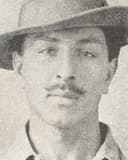
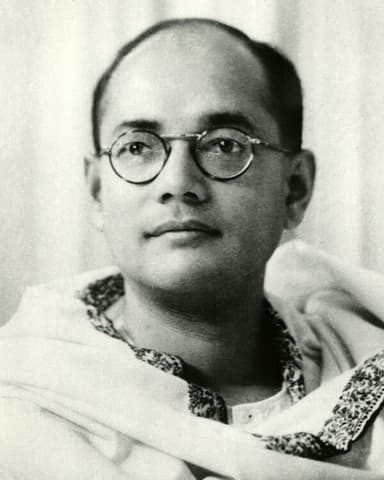
Subhas Chandra Bose
1897–1945
Congress president in 1938 and again in 1939 before breaking with Gandhi, then head of the Azad Hind provisional government and the Indian National Army. Socialist planning and a deliberately inter-religious army with a women's combat regiment — argued alongside an openly stated case for authoritarian rule in freedom's first decades.
Furthest from the middle on Welfare, toward Expansive state provision.
Where they stand
Subhas Chandra Bose on each of the seven scales, from one pole to the other.
Welfare
−8.0Expansive state provisionMinimal/targeted provisionMarkets
−8.0State-led developmentMarket-led developmentRecognition
−5.0Formal equalityGroup remediesNation
−8.0PluralistMajoritarianAuthority
+8.0Civil libertiesStrong stateCulture
−5.0Personal autonomyTraditional normsFederalism
−7.0CentreStates
The record, axis by axis
Every placement is scored on what was said and done — manifestos, legislation, the governing record — and calibrated against the same trade-offs the quiz asks about.
His Haripura presidential address (February 1938) named eradication of poverty and universal education as free India's urgent tasks, and he set up Congress's National Planning Committee that year to design the machinery for it.
Instructed the Planning Committee to 'work for a comprehensive scheme for gradually socialising our entire agricultural and industrial system', and broke with Gandhi's case against the machine in favour of state-led heavy industrialisation
Argued for abolition of caste and opened INA recruitment to every caste, including those the British called non-martial — but his remedy was dissolving caste into one national body, not group remedy, and the quota questions this axis turns on were barely live for him.
Built Azad Hind as a deliberately composite project: Hindustani as common language, a common mess, shared observance of every community's festivals, Muslim officers among his closest commanders, and brigades named for Gandhi, Nehru and Azad — hostile to the Hindu Mahasabha and Muslim League alike.
Held that free India would need socialist authoritarianism on Kemal Ataturk's lines for at least two decades, and ran Azad Hind as a single-party military government — from a man imprisoned eleven times by the state he was fighting
Raised the Rani of Jhansi Regiment (1943) under Lakshmi Swaminathan, an armed women's unit with no precedent in Asia, enforced inter-caste dining in the INA, and married Emilie Schenkl against convention — inside a martial, disciplinarian idiom.
Wanted a strong central government and a single disciplined all-India party to hold the country together, and left nothing on Centre-state power as it is now argued
And where do you stand?
Answer the same trade-offs yourself and get your seven readings, on the scales you just read.
Free · Anonymous · No account