


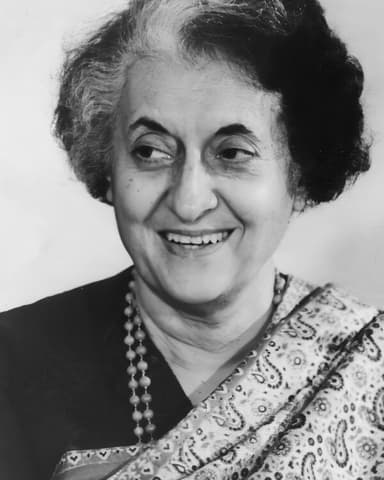
In history
Indira Gandhi
1917–1984
Prime Minister 1966–77 and 1980–84. Bank nationalisation and 'Garibi Hatao' on one ledger; the Emergency, party centralisation and the routine use of Article 356 on the other.
Furthest from the middle on Authority, toward Strong state.
Where they stand
Indira Gandhi on each of the seven scales, from one pole to the other.
Welfare
−8.0Expansive state provisionMinimal/targeted provisionMarkets
−9.0State-led developmentMarket-led developmentRecognition
−1.0Formal equalityGroup remediesNation
−3.0PluralistMajoritarianAuthority
+9.5Civil libertiesStrong stateCulture
−2.0Personal autonomyTraditional normsFederalism
−9.0CentreStates
The record, axis by axis
Every placement is scored on what was said and done — manifestos, legislation, the governing record — and calibrated against the same trade-offs the quiz asks about.
Garibi Hatao and the 20-Point Programme, abolition of privy purses, and the Food for Work scheme that MGNREGA descends from
Bank nationalisation in 1969 and 1980, general insurance in 1972, coal in 1973, plus MRTP, FERA and tightened industrial licensing
Sat on the Mandal Commission report submitted in 1980 and moved to a direct populist appeal over caste coalitions, while deepening the SC/ST special component plan
Wrote 'secular' into the Preamble via the 42nd Amendment and fought the Jana Sangh — against Operation Blue Star and the earlier build-up of Bhindranwale
The Emergency: press censorship, over 100,000 MISA detentions, elections postponed, judicial review stripped by the 42nd Amendment, forced sterilisation
The sterilisation campaign was an extreme violation of bodily autonomy pursued in a modernising idiom; she carried no traditionalist social agenda
Article 356 invoked roughly fifty times against opposition state governments, with CMs appointed from Delhi after internal party elections were abolished
And where do you stand?
Answer the same trade-offs yourself and get your seven readings, on the scales you just read.
Free · Anonymous · No account