


In history
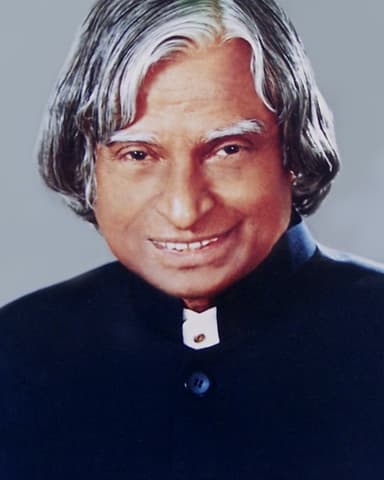
A.P.J. Abdul Kalam
1931–2015
DRDO and ISRO's 'Missile Man', then President 2002–07 by NDA-UPA consensus. Returned the Office of Profit Bill for reconsideration — his one real institutional stand — while mostly leaving mercy petitions undecided, in a presidency built on consensus rather than confrontation.
Furthest from the middle on Nation, toward Pluralist.
Where they stand
A.P.J. Abdul Kalam on each of the seven scales, from one pole to the other.
Welfare
−1.0Expansive state provisionMinimal/targeted provisionMarkets
−1.0State-led developmentMarket-led developmentRecognition
0.0Formal equalityGroup remediesNation
−3.0PluralistMajoritarianAuthority
−3.0Civil libertiesStrong stateCulture
−2.0Personal autonomyTraditional normsFederalism
0.0CentreStates
The record, axis by axis
Every placement is scored on what was said and done — manifestos, legislation, the governing record — and calibrated against the same trade-offs the quiz asks about.
His 'India 2020' and PURA (Providing Urban Amenities in Rural Areas) writings framed rural infrastructure as a national mission, but as President he held no budget power and never fought a welfare-policy battle; this axis's issue space is thin for him by the office's design
A DRDO/ISRO career built entirely inside state-directed technological missions, but with no stated position on ownership or planning as a policy question — thin, not invented
No record; a studiously above-the-fray presidency on caste and quota questions
A practising Muslim who read the Bhagavad Gita and played the veena, a performed personal pluralism rather than a policy record; his one concrete act was a 12 August 2002 visit to Gujarat — his first trip outside Delhi after taking office — where he visited Sabarmati Ashram, directed the state government to arrange relief and rehabilitation, and called the riots 'an aberration that should never happen', but he was reportedly dissuaded by the Modi government from visiting Muslim relief camps and did not press the point publicly
First President to return a bill for reconsideration — the Parliament (Prevention of Disqualification) Amendment Bill, 30 May 2006, questioning its retrospective effect to 1959 — but assented once Parliament repassed it unchanged in August. Acted on only around two of some 24–27 pending mercy petitions (one rejection, one commutation for Assam's Mahendra Nath Das), leaving the rest undecided through to the end of his term, while stating a personal view that the death penalty carried a class bias against 'the poorest of the poor'
Never married, moved between Islamic scripture, the Gita and Carnatic music personally, but built no policy position from it — a personally unconventional life with no legislative or campaigning record on personal autonomy
No record of exercising or commenting on Article 356, Governors, or Centre-state disputes during his term
And where do you stand?
Answer the same trade-offs yourself and get your seven readings, on the scales you just read.
Free · Anonymous · No account