


In history
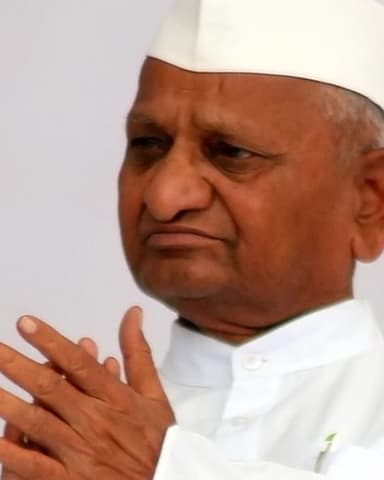
Anna Hazare
Ralegan Siddhi's watershed-and-liquor-ban village model made him a name before Delhi did; the 2011 Ramlila Maidan fast forced a Lokpal resolution through Parliament. Wants gram sabhas placed above Parliament itself — and disowned the party Arvind Kejriwal built from that same movement.
Furthest from the middle on Federalism, toward States.
Where they stand
Anna Hazare on each of the seven scales, from one pole to the other.
Welfare
+2.0Expansive state provisionMinimal/targeted provisionMarkets
0.0State-led developmentMarket-led developmentRecognition
−1.0Formal equalityGroup remediesNation
0.0PluralistMajoritarianAuthority
−2.0Civil libertiesStrong stateCulture
+3.0Personal autonomyTraditional normsFederalism
+7.0CentreStates
The record, axis by axis
Every placement is scored on what was said and done — manifestos, legislation, the governing record — and calibrated against the same trade-offs the quiz asks about.
No entitlement programme of his own: Ralegan Siddhi from 1975 ran on a voluntary six-point code (liquor ban, shramdan labour donation, watershed check-dams) that moved a drought village out of poverty through self-reliance, not state provision — this axis's issue space was never one he engaged nationally
No developed position on ownership or planning in a career spent entirely on anti-corruption and village governance
No caste-quota programme; the Jan Lokpal campaign and Ralegan Siddhi model were both built on anti-corruption and civic-virtue grounds rather than group remedy
No record on religion-and-state questions; his politics stayed almost entirely on corruption and institutional accountability
The 2011 Ramlila Maidan fast (19–28 August) forced a 'sense of the House' Lokpal resolution and RTI-era campaigning before it are genuine checks on state power — but Team Anna's own Jan Lokpal draft concentrated wiretap and prosecutorial power in one unelected ombudsman, and he has separately pushed a Referendum Commission and gram-sabha vetoes that would override Parliament itself, so the net is institutional distrust cutting in more than one direction, not a clean civil-liberties position
Personally celibate and ascetic; enforced the Ralegan Siddhi liquor and dowry bans through community and temple-meeting pressure rather than legal reform, closing down 35 illegal alcohol dens by moral force
Wants gram sabhas empowered above state assemblies and Parliament, in the Gandhi–JP village-republic tradition — a stronger decentralist claim than almost anyone else on this roster save Gandhi and JP themselves
And where do you stand?
Answer the same trade-offs yourself and get your seven readings, on the scales you just read.
Free · Anonymous · No account