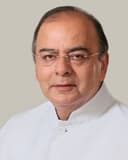



In history
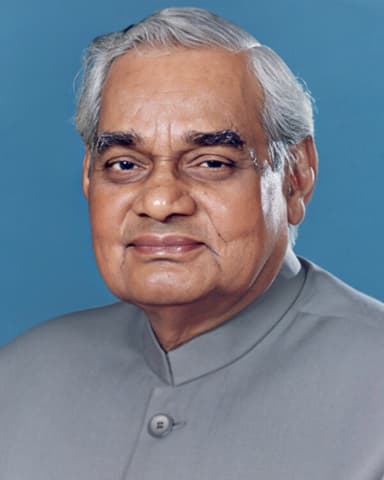
Atal Bihari Vajpayee
1924–2018
Prime Minister in 1996 and again from 1998 to 2004, the Jana Sangh's founding generation finally in office. Pokhran-II and the Lahore bus, the largest privatisation drive any Indian government has run, and a coalition that kept the Ram temple, Article 370 and the uniform civil code off its own agenda for six years.
Furthest from the middle on Markets, toward Market-led development.
Where they stand
Atal Bihari Vajpayee on each of the seven scales, from one pole to the other.
Welfare
−1.0Expansive state provisionMinimal/targeted provisionMarkets
+6.0State-led developmentMarket-led developmentRecognition
−1.0Formal equalityGroup remediesNation
+5.0PluralistMajoritarianAuthority
+3.0Civil libertiesStrong stateCulture
+2.0Personal autonomyTraditional normsFederalism
+5.0CentreStates
The record, axis by axis
Every placement is scored on what was said and done — manifestos, legislation, the governing record — and calibrated against the same trade-offs the quiz asks about.
Antyodaya Anna Yojana (2000) took subsidised grain to the poorest crore of families — deep targeting, not universal provision — alongside Sarva Shiksha Abhiyan (2001) and PMGSY (2000), inside the fiscal-consolidation frame the FRBM Act (2003) wrote into law.
Arun Shourie's Disinvestment Ministry sold VSNL, BALCO, Hindustan Zinc, IPCL, Maruti and Modern Foods; the 1999 telecom shift to revenue-sharing created the mobile market, and the Electricity Act (2003) and IRDA Act (1999) opened power and insurance — against a swadeshi tradition that left labour law and agriculture untouched.
His government passed the 81st and 82nd Amendments (2000) and the 85th (2001), protecting SC/ST reservation in backlog vacancies and promotion seniority, and created a separate National Commission for Scheduled Tribes — from a party lineage that opposed Mandal and never proposed a quota expansion of its own.
RSS pracharak and Jana Sangh founder-generation whose 2002 Goa speech on Islam was openly majoritarian — against the NDA's National Agenda keeping the Ram temple, Article 370 and UCC off the programme, the 2002 'raj dharma' rebuke to Gujarat, and the Insaniyat-Jamhooriyat-Kashmiriyat framework.
POTA in 2002 revived detention without trial and was repealed in 2004 after documented misuse, including against Vaiko in Tamil Nadu — from a man jailed in the Emergency who spent four decades in opposition benches defending parliamentary process
No moral-policing legislation of his own, and a personal life breaking every convention his party defended — against the NCERT textbook revision (2001–03) and Vedic astrology introduced as a university subject in 2001, under Murli Manohar Joshi.
Created Chhattisgarh, Uttaranchal and Jharkhand by consensus in 2000, ran a 24-party coalition on what he called coalition dharma, and the 80th Amendment (2000) gave states a share of all central taxes on the Tenth Finance Commission's scheme.
And where do you stand?
Answer the same trade-offs yourself and get your seven readings, on the scales you just read.
Free · Anonymous · No account