


In history
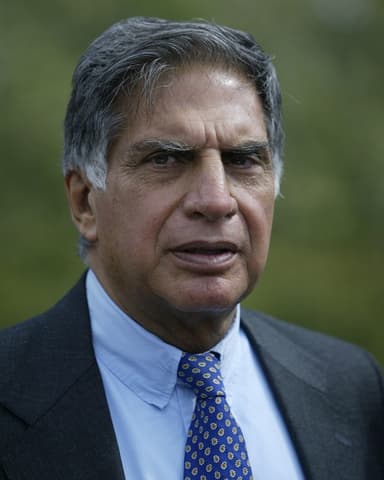
Ratan Tata
1937–2024
Tata Sons chairman 1991–2012 and briefly again in 2016–17. Moved the Nano plant from Singur to Sanand after Mamata Banerjee's dharna, called demonetisation one of India's three most important reforms, and chaired a group whose parent, Tata Sons, is about two-thirds owned by the philanthropic Tata Trusts.
Furthest from the middle on Markets, toward Market-led development.
Where they stand
Ratan Tata on each of the seven scales, from one pole to the other.
Welfare
+2.0Expansive state provisionMinimal/targeted provisionMarkets
+7.0State-led developmentMarket-led developmentRecognition
0.0Formal equalityGroup remediesNation
0.0PluralistMajoritarianAuthority
+1.0Civil libertiesStrong stateCulture
0.0Personal autonomyTraditional normsFederalism
+2.0CentreStates
The record, axis by axis
Every placement is scored on what was said and done — manifestos, legislation, the governing record — and calibrated against the same trade-offs the quiz asks about.
No policy record — a businessman, not an officeholder. Tata Trusts, which he chaired and which hold roughly two-thirds of Tata Sons' equity, fund healthcare, education and rural development at large scale, but this is philanthropic substitution for state provision, not a stated position on the state's welfare role
Drove the post-1991 global-acquisition strategy (Tetley, Corus, Jaguar Land Rover) as chairman, and on record called 2016 demonetisation 'amongst the three most important economic reforms in India's history, along with delicensing and GST' — while also urging relief measures for the poor hurt by it; no record of opposing PSU privatisation
No record found; not a theme he engaged
No record found on religion-and-state questions; a personally low-key figure on this axis
The one concrete power episode is corporate, not governmental: he personally asked Cyrus Mistry to resign as Tata Sons chairman, and the board removed him on 24 October 2016 after 'losing confidence', reinstating Tata as interim chairman (an NCLAT reversal in 2018 was itself overturned) — a founder-trust reassertion of control, but this is boardroom authority and does not translate cleanly onto a state-power axis; no record on surveillance, UAPA or policing
No record found
After Mamata Banerjee's dharna outside the Singur plant (from late August 2008, following her 2006 bandh and hunger strike against the land acquisition), Tata announced on 2 September 2008 that the Nano would leave for a 'safe state', and the Tatas confirmed Sanand, Gujarat on 3 October, standing beside Chief Minister Narendra Modi; he later said the episode 'led Gujarat to become a car-manufacturing hub' — a revealed preference for states competing on investment terms, not a stated position on Centre-state constitutional power
And where do you stand?
Answer the same trade-offs yourself and get your seven readings, on the scales you just read.
Free · Anonymous · No account