


In history
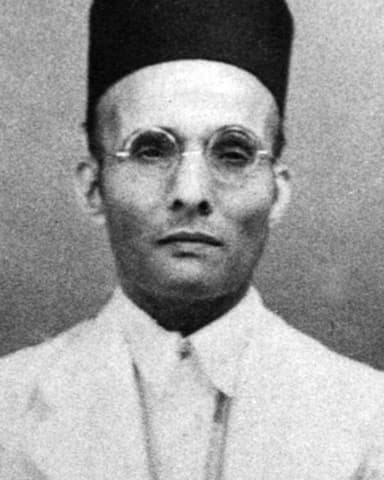
V.D. Savarkar
1883–1966
Author of 'Hindutva' (1923) — the nation defined by Hindu peoplehood — and Hindu Mahasabha president. An atheist rationalist against caste orthodoxy who nonetheless built the majoritarian case that outlived him.
Furthest from the middle on Nation, toward Majoritarian.
Where they stand
V.D. Savarkar on each of the seven scales, from one pole to the other.
Welfare
+2.0Expansive state provisionMinimal/targeted provisionMarkets
+4.0State-led developmentMarket-led developmentRecognition
−7.0Formal equalityGroup remediesNation
+10.0PluralistMajoritarianAuthority
+7.0Civil libertiesStrong stateCulture
−3.0Personal autonomyTraditional normsFederalism
−7.0CentreStates
The record, axis by axis
Every placement is scored on what was said and done — manifestos, legislation, the governing record — and calibrated against the same trade-offs the quiz asks about.
Hindu Mahasabha addresses prioritised militarisation and industrial strength over provision, with hostility to socialism as nationally divisive
Pro-industrialisation and explicitly anti-Gandhian on the machine question; treated Communism as an enemy doctrine
Campaigned against untouchability and built the Patit Pavan Mandir open to all castes, but his remedy was assimilation into one Hindu nation, and he opposed separate electorates and special provisions
Coined Hindutva and its punyabhu-pitrubhu test, articulated the two-nation position at Ahmedabad in 1937, and made Hindu Rashtra the goal
'Militarise Hindudom' and a centralised state consolidating the nation — from someone who was himself a revolutionary against state authority in his youth
Rationalist against the 'seven shackles': attacked cow worship as superstition, advocated widow remarriage, inter-caste dining and marriage, and rejected scriptural authority
A unitary Hindu Rashtra of one nation and one culture, opposed to linguistic-provincial fragmentation
And where do you stand?
Answer the same trade-offs yourself and get your seven readings, on the scales you just read.
Free · Anonymous · No account