


In history
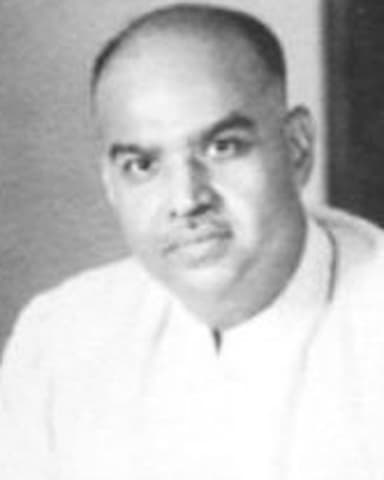
Syama Prasad Mukherjee
1901–1953
Hindu Mahasabha president, then founder of the Bharatiya Jana Sangh in 1951 after resigning Nehru's cabinet over the Delhi Pact. Entered Kashmir without a permit to fight Article 370's 'two constitutions, two flags' and died in Srinagar detention six weeks later, in 1953.
Furthest from the middle on Nation, toward Majoritarian.
Where they stand
Syama Prasad Mukherjee on each of the seven scales, from one pole to the other.
Welfare
−3.0Expansive state provisionMinimal/targeted provisionMarkets
−1.0State-led developmentMarket-led developmentRecognition
−5.0Formal equalityGroup remediesNation
+9.0PluralistMajoritarianAuthority
−2.0Civil libertiesStrong stateCulture
+3.0Personal autonomyTraditional normsFederalism
−7.0CentreStates
The record, axis by axis
Every placement is scored on what was said and done — manifestos, legislation, the governing record — and calibrated against the same trade-offs the quiz asks about.
Vice-Chancellor of Calcutta University before independence and briefly Minister for Industry and Supply (1947–50) under Nehru — an institution-builder in education, in the Maulana Azad mould, though at provincial rather than national scale and predating his own political party
No developed economic programme distinctly his; the Jana Sangh's swadeshi economic doctrine was substantially authored later by Deendayal Upadhyaya, who became general secretary the same year Mukherjee died
Founded the Bharatiya Jana Sangh (21 October 1951, as its first president) partly on resistance to what he saw as excessive accommodation of Muslim-minority political demands, following his resignation from Nehru's cabinet on 6 April 1950 over the Nehru-Liaquat (Delhi) Pact on minority treatment and the plight of Hindu refugees from East Bengal — a formal-equality, anti-special-protection lean, though his specific views on caste quota as distinct from minority-institution questions are not well documented
President of the Hindu Mahasabha (1944–46) before founding the Jana Sangh; entered Jammu & Kashmir on 11 May 1953 without the permit then required under Article 370, was arrested, and died in Srinagar detention on 23 June 1953 after developing chest complications — no formal inquiry was ever held despite persistent claims of foul play. His slogan, 'Ek Desh Mein Do Vidhan, Do Pradhan aur Do Nishan Nahi Chalenge' (one nation cannot have two constitutions, two heads, two flags), is the direct doctrinal ancestor of the BJP's 2019 Article 370 abrogation — a foundational, consequential majoritarian-integration stance
Died in state custody after a permit-violation arrest, without formal inquiry — the receiving end of state power rather than an exponent of it; no distinct record of his own views on preventive detention, policing or press freedom beyond his one-nation constitutional position
A Sanskrit scholar and educationist by formation, suggesting a traditionalist cultural disposition, but with no developed legislative or campaigning record on personal autonomy questions
His defining act was opposition to Jammu & Kashmir's asymmetric constitutional status — 'no separate constitution, no separate flag' for any state — a strongly unitary, anti-special-status position that is the direct ancestor of the Jana Sangh/BJP line
And where do you stand?
Answer the same trade-offs yourself and get your seven readings, on the scales you just read.
Free · Anonymous · No account