


In history
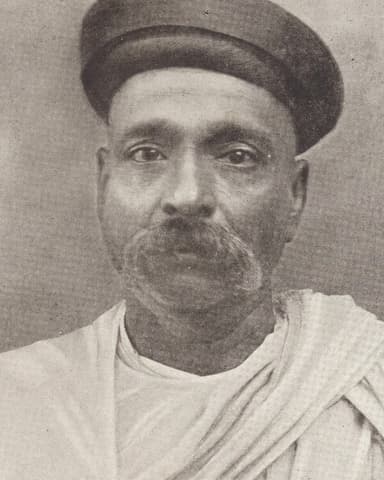
Bal Gangadhar Tilak
1856–1920
'Lokmanya' — Kesari's editor, the Extremists' leader, and the source of 'Swaraj is my birthright and I shall have it'. Mass politics built through the Ganapati and Shivaji festivals and six years in Mandalay for sedition; also the most prominent Indian opponent of the Age of Consent Bill of 1891.
Furthest from the middle on Culture, toward Traditional norms.
Where they stand
Bal Gangadhar Tilak on each of the seven scales, from one pole to the other.
Welfare
−2.0Expansive state provisionMinimal/targeted provisionMarkets
−3.0State-led developmentMarket-led developmentRecognition
−5.0Formal equalityGroup remediesNation
+5.0PluralistMajoritarianAuthority
−5.0Civil libertiesStrong stateCulture
+8.0Personal autonomyTraditional normsFederalism
+2.0CentreStates
The record, axis by axis
Every placement is scored on what was said and done — manifestos, legislation, the governing record — and calibrated against the same trade-offs the quiz asks about.
The 1896-97 famine agitation is the one thing on this axis: Kesari told peasants that relief under the Famine Code and remission of land revenue were rights they could demand, not charity — while his own institution-building, the Deccan Education Society and Fergusson College, was voluntary
Swadeshi and the boycott of foreign goods after 1905 amount to protection of indigenous production against imported manufactures; ownership, planning and the state's economic role were not questions he addressed
Opposed Shahu Maharaj's 1902 Kolhapur order reserving half of state posts for non-Brahmins, and at the March 1918 Bombay untouchability conference spoke against untouchability but refused to sign the pledge others signed — against the Lucknow Pact of 1916, which he negotiated and which conceded separate electorates to Muslims
Amplified the Ganapati festival from 1893 and launched the Shivaji festival in 1895, turning both into vehicles of mass mobilisation through Hindu public religion, and grounded political action in scripture in Gita Rahasya (1915) — while the Lucknow Pact remained the basis of his Home Rule politics
Tried for sedition three times (1897, 1908, 1916) and transported to Mandalay for six years for what Kesari printed; press freedom and the right to agitate were the causes of his life, though he never disowned political violence outright
Opposed the Age of Consent Bill 1891 raising the age from ten to twelve, on the ground that a foreign state had no business reforming Hindu custom; broke with Agarkar over whether social reform should precede politics, and defended Vedic orthodoxy against Shahu's Vedokta challenge
The Congress-League scheme he negotiated in 1916 left most powers with autonomous provinces under a weak centre, and his Home Rule League was organised on linguistic lines — but the Centre-state argument as now conducted did not exist in his lifetime
And where do you stand?
Answer the same trade-offs yourself and get your seven readings, on the scales you just read.
Free · Anonymous · No account