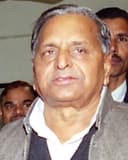



In history
Ram Manohar Lohia
1910–1967
Socialist theorist and the fiercest opponent Nehru faced across the floor. He demanded 60% of every post for backward castes, Dalits, Adivasis, backward minorities and women two decades before Mandal, and pressed 'Angrezi Hatao' and a four-tier Chaukhambha state against the Delhi that ran both.
Furthest from the middle on Recognition, toward Group remedies.
Where they stand
Ram Manohar Lohia on each of the seven scales, from one pole to the other.
Welfare
−8.0Expansive state provisionMinimal/targeted provisionMarkets
−7.0State-led developmentMarket-led developmentRecognition
+9.0Formal equalityGroup remediesNation
−5.0PluralistMajoritarianAuthority
−7.0Civil libertiesStrong stateCulture
−7.0Personal autonomyTraditional normsFederalism
+5.0CentreStates
The record, axis by axis
Every placement is scored on what was said and done — manifestos, legislation, the governing record — and calibrated against the same trade-offs the quiz asks about.
His 1963 'teen anna versus pandrah anna' attack in the Lok Sabha put mass destitution against planning-era spending, and the Socialist programme demanded free universal education, guaranteed irrigation and a ceiling on income differentials
A declared socialist who wanted key industry in public hands, but his 'small-machine technology' and decentralised agro-industrial units rejected both big private capital and Soviet-style state monopoly; he was consistently protectionist against foreign capital
The Socialist Party adopted his vishesh awasar plan at its 1959 conference — 60% of posts for backward castes, SC/ST, backward minorities and women of all castes — followed by a seventeen-point anti-caste programme (1962) and the roti-beti campaign for inter-dining and inter-caste marriage.
Read Gandhi's assassination as a war inside Hinduism, liberal against fanatic, not a Hindu-Muslim quarrel, and pressed both communities to rethink eight hundred years together — while anti-Congressism put socialists into 1967 coalitions with the Jana Sangh, and he wrote of Ram, Krishna and Shiva as the Bharatiya spirit.
Made satyagraha his method and was jailed repeatedly for it — 1940, 1944 (Lahore Fort), 1950, 1954, 1957, 1960; his 1963 Sapta Kranti lists protection of private life against unjust encroachment and the limitation of arms among its seven revolutions.
Gender equality is the first of the seven revolutions; he read Draupadi against Savitri as the model for women, campaigned for inter-caste marriage as the test of anti-caste conviction, and attacked ritual and priestly authority
Chaukhambha Raj gave village, district, province and centre sovereign powers in their own spheres — the most developed decentralisation scheme of his generation — cut against by Angrezi Hatao and his Hindi promotion, the Centre's side of this same argument.
And where do you stand?
Answer the same trade-offs yourself and get your seven readings, on the scales you just read.
Free · Anonymous · No account