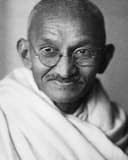



In history
C. Rajagopalachari
1878–1972
Last Governor-General, twice head of government in Madras, and at eighty the founder of the Swatantra Party — the only sustained free-market opposition India has had, built against what he named the 'licence-permit-quota raj'. A Gandhian moralist in everything else: prohibition, temple entry, and the hereditary-education scheme that ended his career.
Furthest from the middle on Markets, toward Market-led development.
Where they stand
C. Rajagopalachari on each of the seven scales, from one pole to the other.
Welfare
+5.0Expansive state provisionMinimal/targeted provisionMarkets
+9.0State-led developmentMarket-led developmentRecognition
−7.0Formal equalityGroup remediesNation
−5.0PluralistMajoritarianAuthority
−5.0Civil libertiesStrong stateCulture
+6.0Personal autonomyTraditional normsFederalism
+6.0CentreStates
The record, axis by axis
Every placement is scored on what was said and done — manifestos, legislation, the governing record — and calibrated against the same trade-offs the quiz asks about.
Swatantra's 1959 principles centred 'maximum freedom for the individual, minimum interference by the State' and attacked deficit-financed planning; his answer to poverty was village self-reliance and lower taxes, not state provision.
Founded Swatantra in 1959 against Congress's Nagpur Resolution on cooperative farming; the party demanded dismantling industrial licensing, confined state enterprise to railways and heavy industry, and opposed nationalisation outright — India's clearest market-liberal programme.
His 1953 Modified Scheme of Elementary Education, attacked as Kula Kalvi Thittam for sending children to learn their parents' trades, cost him office in 1954; Swatantra stood for equality of opportunity without caste distinction, against quotas — offset by the 1939 Temple Entry Authorisation Act.
Proposed the C.R. Formula in 1944, conceding a Pakistan plebiscite to break the Jinnah deadlock, and was denounced by Hindu nationalists for it; a devout Hindu who wrote popular Ramayana and Mahabharata retellings but kept religion out of the state's business.
Swatantra named rule of law, dissent and press autonomy; he campaigned against nuclear weapons and put that case to Kennedy in 1962 — against an anti-Hindi crackdown as Premier (1937–39) that jailed over 1,200 protesters, and a 1950–51 Home Ministership under the Preventive Detention Act.
Pioneered prohibition by closing Salem district's toddy and arrack shops in 1937 and extended it as a moral programme; the hereditary-education scheme rested on an explicit defence of occupational inheritance
Swatantra made decentralisation and limits on central power founding commitments; he reversed his 1937 Hindi policy with 'English ever, Hindi never' in 1965, and engineered the 1967 DMK-led front that ended Congress rule in Madras.
And where do you stand?
Answer the same trade-offs yourself and get your seven readings, on the scales you just read.
Free · Anonymous · No account