


इतिहास में
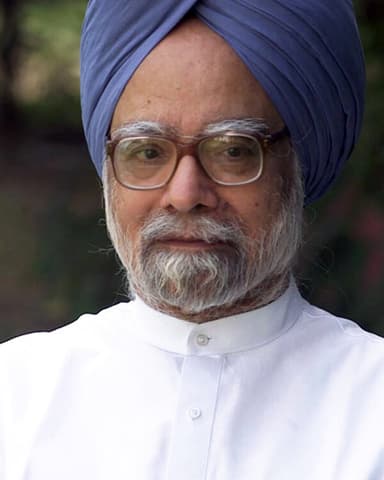
मनमोहन सिंह
1932–2024
1991 के सुधारों के वित्त मंत्री और 2004–14 के प्रधानमंत्री। उनकी सरकार ने भारत का अधिकार-आधारित कल्याण-ढाँचा खड़ा किया — काम, सूचना, शिक्षा, भोजन और वन, सब अदालत में दावे लायक़ क़ानून की शक्ल में — और उसी बहीखाते पर UAPA का विस्तार और धारा 66A भी दर्ज है।
बीच से सबसे दूर कल्याण पर — व्यापक सरकारी सहायता की तरफ़।
ये कहाँ खड़े हैं
मनमोहन सिंह सातों पैमानों पर, एक छोर से दूसरे छोर तक।
रिकॉर्ड, पैमाने दर पैमाने
हर जगह इस आधार पर तय हुई है कि क्या कहा और क्या किया गया — घोषणापत्र, क़ानून, सरकार चलाने का रिकॉर्ड — और उन्हीं सवालों पर परखी गई है जो यह क्विज़ पूछता है।
सबूत का हवाला अंग्रेज़ी में
NREGA (2005), the Right to Education Act (2009) and the National Food Security Act (2013) made work, schooling and grain legal entitlements, not schemes; add the Forest Rights Act (2006), the National Rural Health Mission (2005), RSBY cover and the ₹71,000 crore 2008 farm-loan waiver.
Architect of 1991 as Finance Minister; as PM he opened multi-brand retail to FDI (2012) and deregulated petrol and diesel pricing — but the Left blocked privatisation until 2008, no labour law moved in ten years, and the 2013 Land Acquisition Act sharply raised land-acquisition costs.
The 93rd Amendment (2005) and Central Educational Institutions Act (2006) extended the 27% OBC quota to IITs, IIMs and central universities, upheld in 2008 — the largest expansion since Mandal; plus the Sachar Committee, the Ranganath Misra Commission, and a 4.5% minority sub-quota struck down in 2012.
Repealed POTA (2004) over its communal application, commissioned the Sachar Committee on Muslim disadvantage (2005), and said minorities must have first claim on national resources — pushing a communal violence bill from 2005 that his own coalition never passed.
The RTI Act (2005) is India's strongest transparency law, and POTA was repealed (2004) — against the 2008 and 2012 UAPA amendments that made POTA's provisions permanent, Section 66A, AFSPA kept despite the Jeevan Reddy Committee's 2005 repeal recommendation, and Aadhaar run five years with no statute behind it.
The Domestic Violence Act (2005), Prohibition of Child Marriage Act (2006), POCSO (2012) and the post-Verma Criminal Law Amendment (2013) — against a government that argued both sides of Section 377 in the Delhi High Court, seeking review only after the Supreme Court recriminalised it in December 2013.
Ten years of coalition dependence on the DMK, TMC and NCP produced real accommodation — the Teesta accord dropped in 2011 at Bengal's insistence, and Article 356 used sparingly — but the National Counter-Terrorism Centre was withdrawn in 2012 after non-Congress chief ministers called it an intrusion on police power.
और आप कहाँ खड़े हैं?
यही सवाल ख़ुद हल कीजिए और अपनी सात रीडिंग पाइए — उन्हीं पैमानों पर, जो आपने अभी पढ़े।
मुफ़्त · बिना पहचान · अकाउंट नहीं