


इतिहास में
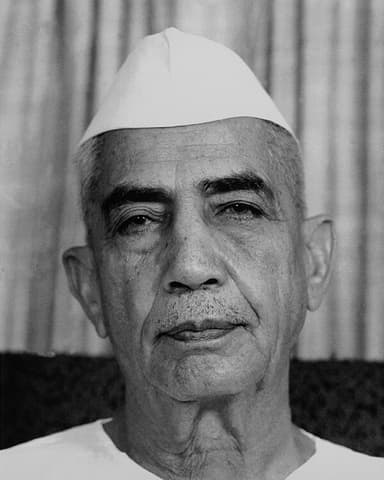
चरण सिंह
1902–1987
छह महीने से भी कम के प्रधानमंत्री, और उससे पहले वह शख़्स जिसने उत्तर प्रदेश में ज़मींदारी ख़त्म की और तीस साल यह दलील दी कि भारत की योजनाएँ किसान के ख़िलाफ़ शहरी साज़िश हैं। उत्तर भारत की राजनीति का पिछड़ा-वर्ग खंड बड़ी हद तक उन्हीं की रचना है।
बीच से सबसे दूर मान्यता पर — समूह-आधारित उपाय की तरफ़।
ये कहाँ खड़े हैं
चरण सिंह सातों पैमानों पर, एक छोर से दूसरे छोर तक।
रिकॉर्ड, पैमाने दर पैमाने
हर जगह इस आधार पर तय हुई है कि क्या कहा और क्या किया गया — घोषणापत्र, क़ानून, सरकार चलाने का रिकॉर्ड — और उन्हीं सवालों पर परखी गई है जो यह क्विज़ पूछता है।
सबूत का हवाला अंग्रेज़ी में
His demand was better terms of trade for agriculture, not transfers: remunerative prices, rural credit and irrigation investment, argued in 'India's Poverty and Its Solution' (1964) and 'India's Economic Policy: The Gandhian Blueprint' (1978), with no welfare entitlement of his own.
Fought the 1959 Nagpur Resolution on cooperative farming on the floor and wrote 'Joint Farming X-Rayed' against it, holding peasant proprietorship the efficient form — while legislating ceilings on that same property in the UP Land Holding Act (1960) and pressing the state to guarantee crop prices.
Demanded posts for tillers of the soil from 1939, shifting after 1967 to backward-caste representation; Mandal was set up in January 1979 under Morarji Desai, days after Singh rejoined as deputy PM — and his own 1979 caretaker Cabinet moved a 25% Class-I/II reservation the President declined to notify.
Forced the dual-membership question that split the Janata Party in 1979, refusing to govern alongside ministers who kept RSS membership — from a leader whose 1967 UP coalition had included the Jana Sangh, whose peasant base overlapped with it.
Set up the Shah Commission on Emergency excesses and was himself jailed during it — against dismissing nine Congress state assemblies as Home Minister (1977) and having Indira Gandhi arrested that October, on a case the courts threw out the next day.
Personal austerity and a khap-country Jat peasant base with no social-reform programme; zamindari abolition was the one order he genuinely overturned, and it was an economic one. Most of this axis's issue space postdates him
Built the first serious state-level challenge to Congress dominance as UP's first non-Congress CM (1967) and through the Bharatiya Kranti Dal — then, as Union Home Minister in 1977, carried out the heaviest single use of Article 356 outside the Emergency.
और आप कहाँ खड़े हैं?
यही सवाल ख़ुद हल कीजिए और अपनी सात रीडिंग पाइए — उन्हीं पैमानों पर, जो आपने अभी पढ़े।
मुफ़्त · बिना पहचान · अकाउंट नहीं