


इतिहास में
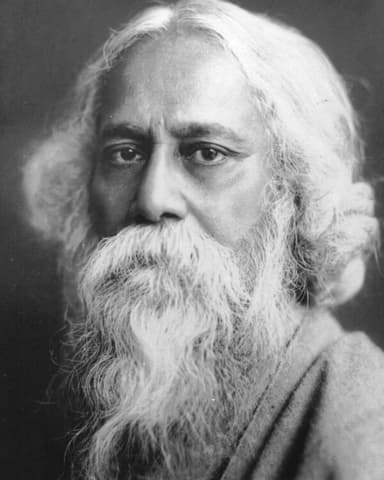
रवींद्रनाथ टैगोर
1861–1941
कवि, नोबेल विजेता, और ख़ुद राष्ट्रवाद के सबसे तीखे भारतीय आलोचक — 1917 के व्याख्यान राष्ट्र को 'पूरे जन-समाज का संगठित स्वार्थ, वहीं जहाँ वह सबसे कम मानवीय और सबसे कम आध्यात्मिक है' कहते हैं। 1905 में स्वदेशी आंदोलन में उतरे और उससे अलग भी हुए, जलियाँवाला बाग़ के बाद 'सर' की उपाधि लौटाई, और विश्व-भारती व श्रीनिकेतन को औपनिवेशिक और राष्ट्रीय — दोनों राज्यों — के विकल्प की तरह खड़ा किया।
बीच से सबसे दूर राष्ट्र पर — बहुलतावादी की तरफ़।
ये कहाँ खड़े हैं
रवींद्रनाथ टैगोर सातों पैमानों पर, एक छोर से दूसरे छोर तक।
रिकॉर्ड, पैमाने दर पैमाने
हर जगह इस आधार पर तय हुई है कि क्या कहा और क्या किया गया — घोषणापत्र, क़ानून, सरकार चलाने का रिकॉर्ड — और उन्हीं सवालों पर परखी गई है जो यह क्विज़ पूछता है।
सबूत का हवाला अंग्रेज़ी में
Swadeshi Samaj (1904) argued that society should organise its own schools, water and health rather than petition the state, and Sriniketan's Institute of Rural Reconstruction in the early 1920s, with Leonard Elmhirst, put that to work through village health, cooperative credit and adult education — provision without a state
Ran cooperative agricultural credit on his own Patisar estates but left no position on ownership or planning; Letters from Russia (1930) admired Soviet mass education while condemning the coercion that produced it, and settled nothing
Chandalika (1933) and Gora (1910) attack caste as an offence against personhood, and he was at Gandhi's side when the 1932 fast against separate electorates was broken — a formal-equality resolution, arrived at by a writer who never sought a reform statute
Nationalism (1917), delivered in Japan and America; Ghare Baire (1916), where Swadeshi's coercion falls on a poor Muslim trader; and Visva-Bharati (1921), founded on 'yatra visvam bhavatyekanidam' against national boundaries — he had left the Swadeshi movement by 1907 over the compulsion and communal edge he saw in it
Renounced his knighthood on 30 May 1919 in an open letter to the Viceroy over Jallianwala Bagh, made freedom from fear the condition of the country's awakening in Gitanjali, and closed with Crisis in Civilisation (1941) indicting imperial power
Against child marriage, for widow remarriage, co-education at Santiniketan, and a public rebuke to Gandhi for reading the 1934 Bihar earthquake as divine punishment for untouchability — a body of writing rather than a reform programme, and one his own household's conventions did not always match
Swadeshi Samaj's self-governing samaj and Sriniketan's village-level organisation carry a decentralist instinct, but he wrote nothing on Centre-state power as it is now argued
और आप कहाँ खड़े हैं?
यही सवाल ख़ुद हल कीजिए और अपनी सात रीडिंग पाइए — उन्हीं पैमानों पर, जो आपने अभी पढ़े।
मुफ़्त · बिना पहचान · अकाउंट नहीं